I know, I know…politics and religion are tough topics on a first date…

Or a second or third date. But this isn’t a date, and I couldn’t resist. I came across a great quote from Elizabeth Warren, an attorney and Harvard Law School professor who is running for Senate on the heels of her role (as chair of the Congressional Oversight Committee) in the clean up and bailout of the American financial system following the economic crisis that began in 2008. Time magazine dubbed her in May of 2010 as one of the “New Sheriffs of Wall Street.”

She said: “There’s nobody in this country who got rich on his own. You built a factory out there? Good for you. But I want to be clear: you moved your goods to market on the roads the rest of us paid for; you hired workers the rest of us paid to educate; you were safe in your factory because of police forces and fire forces that the rest of us paid for. You didn’t have to worry that marauding bands would come and seize everything at your factory, and hire someone to protect against this, because of the work the rest of us did.”

She continued: “Now look, you built a factory and it turned into something terrific, or a great idea? God bless. Keep a big hunk of it. But part of the underlying social contract is you take a hunk of that and pay forward for the next kid who comes along.”

Elizabeth Warren

Any way you look at it, Elizabeth Warren’s words make sense and are difficult to debate, from any perspective or party affiliation. Her quote is rational, and full of American pride, evoking sentiments of famous essays and speeches made by the likes of Thomas Paine, and more recently, John F. Kennedy.

I agree with her words and the meaning behind them. To disagree would be ridiculous, ignorant and just plain silly. Elizabeth Warrant is right; no matter how far “left” her platform leans.

But to truly evaluate the merit of Warren’s quote, one must understand why she made it in the first place. Political strife and disagreement is dominating our headlines as our nation drifts deeper into one of its most difficult economic recessions in its history. Our nation is divided on every issue imaginable, across party lines, and in order to motivate all branches of our government to act to help solve the economic problems, which pose the most immediate and salient threats, our president and most of our populace are forced into making unfathomable and deal-breaking concessions and compromises that challenge our moral fiber to its core and could have lasting negative effects for our children and all future generations of Americans that are, well, unacceptable.

An overwhelming majority of noise, on both sides of our economic debate, centers on raising taxes on the very wealthy (the top 1% of annual incomes in the US) as well as eliminating loopholes and increasing the net tax income from corporations. This debate is the impetus for Elizabeth Warren’s quote, and how the debate and subsequent tax revisions play out will shape the economic landscape of our nation for years to come.

While Warren’s words are 100% true, and should be taken to heart by all Americans, I urge people to recognize that just because something is true and meaningful, does not mean that there are not valid and important arguments regarding the spirit of said quote that must be considered as well. I define and discuss two “theories” below that may help explain some of the more complex hot-button issues in terms easier to understand.

Our government as a landlord theory – In any real estate project, such as an office building, an office or industrial park, a shopping mall or lifestyle center or even a residential community or apartment building, the property owner or landlord tries to maximize revenues by minimizing vacancies and bringing in as much rental revenue as possible. To do so, landlords employ a number of incentive-driven programs and policies in order to maximize profitability. These include: giving tenants free rent for a period of months and even years when signing long-term leases; lowering rents, providing visibility (through signage, preferred location and advertising efforts) and increasing allocated fit-out dollars to high-profile or anchor tenants, with the idea that these tenants will attract additional, credit-worthy tenants that would be willing and able to pay higher rents as long as those high-profile anchors remain in place; and adding state-of-the-art amenities to attract residents, employees and customers to the site.

Our government wears the hat of a landlord or property manager when trying to attract or maintain corporate headquarters, manufacturing plants and distribution centers on American soil. A lot of criticism has recently been raised by the “Tea Party” and the conservative right as a whole, pointing out that the U.S. is losing many of its companies and a large number of jobs due to management decisions to move companies, facilities and most importantly, JOBS, overseas. These decisions include actual physical relocation as well as outsourcing. The right argues that America’s corporate tax rates are among the highest in the world, and raising taxes on these corporations and their rich C-level employees and management would serve to de-incentivize them even more.

It is unfair to expect companies, whose management makes decisions solely based on the bottom-line and shareholder expectations, to act any differently than prospective apartment renters, retail stores or law firms do when looking for a new home, storefront or office space. All try to maximize benefits while minimizing their rent payments. Our government must act to incentivize corporations to remain on American soil, and also lure foreign companies to open plants, facilities and offices here as well. Existing jobs need to remain and new jobs must be created here, for our citizens, not shipped or outsourced overseas. Our government must do all it can to ensure companies want to do business here in America, maximizing job opportunities and revenues from taxes, both at the individual and corporate level. Incentives are one of the keys to finding a balance that is best for everyone.

Funds put away for a rainy day theory – Be it a coffee can, a cookie jar or just under a mattress, everyone is familiar with the idea of socking away money for a rainy day. That rainy day may play out as a loss of employment, an unforeseen accident, a death in the family, an illness or a natural disaster. Or a rainy day may take the form of something good that was simply unexpected, such as an unplanned second or third child, an educational or cultural opportunity too good to pass up but that costs a great deal more than expected, or a celebration (marriage, graduation, rite of passage, anniversary, second honeymoon, etc.)

It is clear that our government has failed to put any savings away for a rainy day. And for nearly four years, it has been pouring out there…everywhere. Our financial system is broken, and the world financial stability around us is crumbling as well. For perhaps the first time since the Great Depression, our citizens have very little faith in our government’s ability to manage our national finances – a sentiment echoed loudly by Moody’s unprecedented lowering of our nation’s credit rating.

Rich people such as Warren Buffett and many celebrities have publicly pleaded for our government to raise taxes on the rich, which selflessly includes themselves. That sentiment is good, and should be appreciated. But the larger, more pressing problem that actually exists in our nation’s capital right now is not HOW to bring more money into its coffers (it has an abundance of options there, beginning with its omniscient and unique power of printing more money) – our governments biggest challenge is the fact that it clearly has no clear plan of what to do with the money once it gets it. Our government has grown way too large and bulky in the past 60 years, and does not have the ability to be nimble and flexible at times of crisis, or when multiple threats or challenges emerge simultaneously. Moreover, the bi-partisan nature of our government has grown into such extremist caricatures of what two parties should actually represent, that it is highly unlikely that compromise can ever take place in a manner that will actually solve any problems without creating 3 more in their place.

But perhaps the largest challenge of our time is the fact that our nation has arrived at a very critical and unhealthy point it its development and maturation cycle.  Our citizens, from the top down to the bottom, are unwilling to get our hands dirty and perform the often painstaking tasks of driving progress, rather than the much easier road we have slipped onto, the road of least resistance, where we coast off of the hard work, difficult decisions and life-risking actions taken by the generations that came before us. We all figure that the incredible technological developments of the past ten or twenty years are enough for us to sit back and watch the world around us as we become more and more physically detached from reality and what it really takes to make our world prosperous once again.

We live in a world where people would much rather criticize than actually lead from the front. It is so much easier to find fault in something, and then write or blog or squawk or tweet or argue or go on a reality show and demean it and everything we stand for than it is to come up with a better way, find some passionate people who agree in principle and then invest the 15-20 hour days required to make it happen, to effect positive change.

Social Security IS a Ponzi scheme. Not in theory, but in the way it actually has evolved, because of horrible decisions and mismanagement of the system by our leaders of today, yesterday and those before them. If we can’t find a way to bring back the confidence of our own citizens, who worked their whole lives and paid a tidy sum into the government kitty so that their retirement from living the American Dream would not become an American Nightmare, then all is lost. Washington is and has always been full of some of the best and brightest America has to offer, many of whom make more money annually than the average US citizen will earn in 10 or 20 years. These people knew that the average lifespan of Americans was rising, and would continue to rise steadily as medicine and technology and basic COMMON SENSE (about smoking and fatty foods, for example) improved. It is no excuse that people are living longer and getting sicker and we just don’t have the money to cover it. The truth is, we would all have plenty of money if the funds were invested and secured properly in the first place.

Bottom line, our government’s rainy day fund is empty, and the jar that housed it is broken beyond repair. Furthermore, the discipline necessary to implement the fund in the first place has eroded long ago, and every new “regime” that gets elected to office spends more time, energy and money UNDOING the efforts of those before them than actually solving the problems we face today. And those who disagree with how to solve today’s problems simply filibuster and create enormous barriers to all efforts made by our elected officials. The system is broken, and we all are paying the price, with our retirement funds, our pensions, our Medicare, our health care system, our financial system, our housing market, our ability to borrow money, the number of years we need to work in order to retire, and the value of our dollar when we travel or conduct business overseas.

And don’t even get me started on our system of unions, which in theory, again, are an incredible and indispensable innovation to American labor. But like our government itself, they have grown fat, inefficient and lazy over the years, and currently cause far more problems than they solve in today’s economy.

These are trying and difficult times for our government and the American people. Elizabeth Warren fired a salvo off the bow of The American Right. Her words should not be ignored. But they must be heeded with care, as there are mitigating factors to the spirit of her message. I urge everyone to educate themselves as best they can on the challenges facing our country. Though I do find merit in Orwell’s message that Ignorance is Bliss, we are all responsible for what comes next, be it through action, inaction or ambivalence.

I apologize for getting political, and for being so verbose. But if I am going to write, I might as well discuss important, difficult and polarizing topics every now and then.

Til next time,

IDROS

Leave a comment

Filed under Politics

One Million Dollars….

The hikers’ release

For half a million a piece

Brings joy to our nation and friends;

But my logical fear

Which should loom loud and clear

When viewed through a pro-Israel lens:

Iran gained global cred

Just one day ahead

Of Mahmoud’s scheduled UN address;

He’ll use his goodwill

To slander Israel

And help out with Palestine‘s quest.

So congrats Josh and Shane

For an end to your pain

But your freedom is reason for pause;

The million we spent

Almost certainly went

To fund an undeniable cause:

To buy ammunition

And deadlier weapons

To point at Iran’s Jewish neighbor;

And the ransom, you see

Came from taxes and fees

Paid from American labor.


Leave a comment

Filed under Current Events, Politics

Five for Fixing, Part III….

1) Multiple person restrooms (those without locking doors) located in public venues, such as restaurants, shopping malls, casinos, amusement parks and movie theaters, etc., should be required by the NIH and OSHA to engineer their entrance doors to open as a pull door from the outside and as a push door from the inside…ALWAYS. People entering a public restroom will not care that they are forced to touch a door handle on their way in, but we all loathe any situation requiring us to touch the obviously germ-infested handles on our way outs, particularly those of us who make a habit of actually washing our hands after using the facilities.

2) Be it white collar, blue collar or maximum security prison, any person who serves time in jail during their lifetime, gets out after serving their sentence, and makes more than $100,000 per year (maybe less, but that would be a good starting point) at any time following their release, should be required to first repay the full cost in tax-payer dollars to keep them in prison throughout their sentence, and then pay a “prison tax” above and beyond their traditional tax requirements on a sliding scale, based on income.

The scale could ensure all moneys are repaid in full over the same period they were imprisoned, so for example, Michael Vick, who served nearly 2 years, would need to repay the full cost of his imprisonment over a two-year period, and since Vick earns a ridiculous salary, he would also need to pay the “prison tax” on top of said repayment, and continue to pay it for as long as he earned 6+ figures. Someone like Vick would be taxed an additional 25 to 30% over and above his tax bracket, making his total tax percentage somewhere around 60%. His ridiculous $100 million contract, if paid in full, would therefore net Vick around $40 million, minus whatever his total cost of imprisonment turned out to be.

It is totally ridiculous that people like Michael Milken, Martha Stewart, Plaxico Burress, Wesley “Demolition Man” Snipes, Michael Vick, Lindsay Lohan, Mike Tyson, myriad Mafiosi, drug dealers, ponzi schemers, inside traders, embezzlers, DUI killers (like Donte Stallworth) and repeat offenders (like half of Hollywood), tax evaders, sex offenders, arms dealers, insurance fraud perpetrators, robbers et al are 100% free to make egregious sums of money without repaying the cost to taxpayers their crimes and others like them cost us every day.

I know. I know. They all pay their debt to society when serving their prison sentence. And I agree, in a moral sense. But financially I completely DISAGREE. There are costs to our society to have a criminal element among us. Police departments, prisons, auditors, and our entire court system to name a few spend billions in taxpayer dollars every year dealing with criminals of all types.

Compare this to our health system, which I agree is broken, but still helps make a case here. All of us who have health insurance are forced to pay even higher premiums and co pays to basically cover the costs of all the people who refuse or cannot afford to get insurance. Similarly, those criminals who will earn 6-figure salaries after serving time will be “covering” (or at least defraying) taxpayer costs for themselves as well as all the criminals who will not (and there are a lot more of them) as well as all the criminals who will never be released.

3) People (and by people I am generally referring to females, and possibly bottoms) need to stop referring to every milestone in a relationship or marriage as an anniversary. There is no such thing as a 5-month anniversary, or a 3-week anniversary. Anniversary is a word which derives from the Latin root word annus, which means YEAR, and versus, the past participle of vertere, meaning to turn. So while everyone is certainly entitled to celebrate 8 months together or 2 weeks together, please stop referring to the event as an anniversary. It completely dilutes and belittles true anniversary celebrations, and is frankly infantile, reminding people of early childhood when most of us referred to our ages in fractions. Moreover, our youth does not engage in celebrations upon turning 4 ¾ or 8 ½.

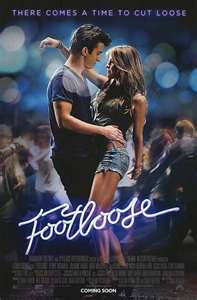
4) I think movie studios should raise their own stakes for cop-out decisions to remake a movie, whether it was a classic or not. With the pending release of an “updated” Footloose, and the atrocious recent performance of an updated “Arthur,” I had a pretty great epiphany. I am fine with ambitious updates of movies that market great stories to new generations in original ways. Last year’s release of True Grit by the Coen Brothers was a perfect example of re-releasing a classic movie with sharper writing, smart casting choices all while still honoring the original film with a modicum of deference and respect.


With Footloose, however, I am a bit skeptical. So, here is my recommendation, guaranteed to increase the stakes of releasing an updated film and generally heightening the experience for everyone. Every studio or producer that intends to update a previously released film should always have an addendum to their contract with the original studio/owner of the film when purchasing the rights. And if the same studio or owner of the film’s rights decides to update a film on their own, they still must be subject to this same addendum:

If the updated film fails to earn more than the original, when converting original box office receipts to present day dollars, all proceeds must be yielded to the original studio, cast and crew. If the updated film fails to break even, all future revenues attached to said update (including but not limited to international box office, DVD sales, television rights and merchandising) go to the original studio, cast and crew.

Recent releases “Fright Night,” and “Conan the Barbarian,” both updates of 1980s films, are not faring too well at the box office. Were my recommendation enacted, perhaps the Governator would have been right all those times he warned “I’ll be back.”

5) Why do armored truck companies like Brinks and Dunbar insist on emblazoning the sides of their trucks with the company name and the words “armored vehicle”? This is a clear signal to criminals to target that particular vehicle for a heist. I understand the advertising value inherent in name recognition, but there has to be a better, safer way. Banks put their name on the outside of their buildings because they NEED people to be able to find them, walk in and make deposits or secure loans. Armored trucks do not need or want people to find them.

The same principal holds true for police officers. Uniformed officers wear their uniforms and drive clearly marked police cars so that everyone around knows there is an officer of the law in the vicinity. It makes the innocent feel safer and deters criminals from committing crimes. But undercover police officers and detectives drive UNMARKED cars and wear civilian attire so they attract no attention. This allows them to perform their detective work and gain access to places and sometimes gangs or drug cartels unnoticed, to uncover massive injustice and illegal activity. It also allows some police officers and U.S. Marshalls to make our highways and airplanes safer by patrolling the roads and skies unbeknownst to other drivers and fliers. Similarly, unmarked armored trucks would be free to engage in their primary responsibilities without a blatant bulls-eye on their sides.

So to all armored truck companies, please rethink your strategy. Advertise on television, in periodicals and on-line. Put your name on billboards and in stadiums. This may not completely eliminate robbery attempts on your trucks, but it will certainly decrease their frequency.

1 Comment

Filed under Uncategorized

WY SP, WY? Say it isn’t so….

As Philadelphia’s once undisputed FM radio king of the ratings, 94.1 WYSP, sets to close its doors, ending its nearly 40 year run in a now anachronistic era of terrestrial music radio, I feel it imperative to give the station its due.

Having come of age in the Philadelphia area during WYSP’s heyday, I have very fond memories of the station.

I suppose you could say I have always been an old soul regarding my musical preference. From a young age, I generally have preferred music dating from before my time with very few exceptions. Sure, I loved MJ, Madonna and The Police as much as most every other adolescent girl and boy of the 1980s did. In fact, I was a fan of most 80s music, which helped shape my generation, for better or for worse, and still love most songs from that decade to this day.

But the music that truly shaped my journey through puberty and that I must credit (along with my father and various camp counselors) for my vast musical knowledge to this day mostly dates from the 1960s and 1970s. From Aerosmith to ZZ Top and all things Motown, I couldn’t get enough. I was sure from a very young age that I had been born at least a decade too late.

This was before MP3s. This was even before CDs. Exchanging music was done through mix tapes and copies of albums. My first album collection was an incredible stack of 8-track tapes that included Billy Joel’s The Stranger, Steely Dan’s Aja, Simon and Garfunkle’s Bookends, Stevie Wonder’s Innervisions and Fleetwood Mac’s Rumors.

My father made brunch on many a Sunday as I grew up with the melodious tunes of Liverpool’s Fab Four echoing throughout our house. Breakfast with the Beatles, a Philadelphia staple since 1976, was an actual event, not just a radio show, in my household for most of my youth. My father’s vinyl collection was an impressive sampling of all the greatest artists of the 1950s through 1970s.

When 94.1 WYSP went to a “Classic Rock” format in 1981 (and WYSP invented “Classic Rock,” becoming the first station in the nation to adopt the format), it seemed to be catering to my personal musical preference. Except for the Motown, all of my favorite artists and songs were played on this station – and the best part was, I wouldn’t become sick of the same two or three tracks from each album that they would play over and over again for quite a few years.

Sure, WYSP expanded its playlist over the years, adding late 1980s and even 1990s music to its repertoire (and making me and my generation feel old in the process, as music from our youth became “classic”), but the lions’ share and most significant and beloved music the station had to offer dated from the preceding decades, tacitly acknowledging that all music created after those decades, even if attaining classic rock status, owed everything to the pioneers of the genre, the golden age of rock, the 1960s and 1970s.

Furthermore, in 1986, WYSP became the first station on which Howard Stern syndicated his incredible and controversial morning show and ratings monster. 94.1 became a force to reckon with on the airwaves, destroying its local rival 93.3 WMMR. I loved Howard Stern and listened and laughed as I got ready for school (and later drove to school) each morning. And when school let out, I listened to WYSP’s music on the way home.

But for me, what I will always remember about WYSP is how it basically built my vast music collection overnight.

For many years, the station featured Classic Rock’s Top 500 Countdown over Labor Day Weekend. Listeners would help determine the list and rankings by voting for their favorite songs of all time. WYSP hosts would ask listeners to mail in a postcard ranking their top 3 songs of all time, from which various station employees would cull and order the ultimate top 500. In 1991, my senior year of high school, I mailed three such postcards to the station.

One ranked the following 3 songs: 1) Stairway to Heaven, Led Zeppelin; 2) Deacon Blues, Steely Dan; 3) Comfortably Numb, Pink Floyd

The second listed these songs: 1) Sugar Magnolia, Grateful Dead; 2) A Day In The Life, The Beatles; 3) Scenes From an Italian Restaurant, Billy Joel

And the third listed these songs: 1) Funeral for a Friend, Elton John; 2) After the Goldrush, Neil Young; 3) Like a Rolling Stone, Bob Dylan

I left for college that August, never getting to hear the countdown that year.

Tuesday after Labor Day I got a message in my dorm room from my father. I returned his call and he asked me if I was sitting down. I lied and said yes. He then asked if I happened to have sent any postcards to any radio stations before I left for school.

I wracked my brain, and told him I had. “Why?” I asked.

“You are amazing,” he informed me. “Remi [your cousin] called me first. She was pretty sure she heard your name announced on WYSP as the winner of their Labor Day 500 contest.”

My heart was in my throat and I got a little dizzy from excitement. It was already hot in my non-air conditioned dorm in early September North Carolina. I was sweating.

“Ok,” I managed to reply, hoping to urge my father to get to the point.

“Well they called the house and left a message today.  I called them back and sure enough, your postcard was drawn. You won.”

“Did they say what I won?” I asked, fairly sure I already knew the answer.

“Yup. Every song on the countdown, on compact disc, and a Yamaha rack system with five CD-changer and six speakers. Pretty serious prize. Just wanted to let you know the goings on back home and keep you up to date. I will let you know when and how they want you to claim the prize.”

“Me? Dad, I am in college 500 miles away. Can’t you pick it up? I’ll make it worth your while.”

“Well I don’t know.  Your name was on the card. If they let me claim the prize, I will be happy to. Otherwise, maybe you can get it over Thanksgiving.”

“Holy shit.”

“Holy shit is right. Congratulations. This should make the transition to college a little better, no?”

“I am speechless. Thanks dad. I love you. Say hi to Mom and Mel.”

“Will do.”

My CD collection grew by 341 discs. The sponsoring music store even allowed me to exchange my doubles for anything in their store, even exchange. The new stereo was too big and expensive for the college experience, and thus did not make the trek to Durham. Sure, some of the songs overlapped on compilation and greatest hits albums. I even got a couple box sets. But the vast majority of songs came on unique, original albums with colorful and playful cover artwork.

I received every Beatles and Rolling Stones album ever released, as they were the two bands with the most songs on the top 500 list.

I still remember sampling the goods with my buddy Marc as he drove us to and from school a few times a year. The rest were unveiled at my own pace and became a significant part of the soundtrack of my collegiate years. Deep tracks on many of the discs yielded musical gems never played on stations like WYSP. I devoured them eagerly.

So thank you WYSP for playing the soundtrack of my formative years, and for providing that playlist to me in the form of an incredible prize, which allowed me to continue to revel in some of the best music ever created for years to come. I will always remember you as my favorite terrestrial radio station of all time and the left-most button (preset number 1) of every car I drove in the Philadelphia area.

Leave a comment

Filed under Uncategorized

Generation Why?

Here is a source of frustration new to the digital age. My grandparents never dealt with a scenario like this – but then again, I never walked to and home from school each day, uphill both ways and in the snow:

Most people who work in an office setting have a company computer network they must log into and out of each day. So when we corporate cogs start work, we create a password. Every few months, our trusty system (or office IT professional) prompts us to create a new password for security reasons. Some networks force users to have a rotation of three, and even four different passwords because when prompted to create a new password, one parameter often states “please choose a new unique password, distinct from the password you used both most recently and during the period before that” (or some reasonable facsimile).

We sleepwalk into work on anymorning M-F, and we power up our workstations. A familiar prompt greets us, and those login fields beckon. Pure reflex takes over as we hunt and peck our password symbols into the correct field. Alas, we get a red error message. Maybe we misclicked an adjacent character on the keyboard. Perhaps CAPS LOCK was enabled, screwing up the entire process. Or, on occasion, we key in a password in our rotation that is not currently correct, forgetting that it recently changed.

This mental lapse is akin to writing the wrong date, on checks and homework assignments, for instance, for an indeterminate but prolonged period after New Years each year.

So we silently mutter a four letter word or two in our office/cubicle/hotel room/living room (depending on where we are working from this lovely morning). And we try again. This time, we make sure CAPS LOCK is off, and we wrack our brains to make sure we know which password we are currently using. We enter the characters and hit enter. Generally, we hit pay dirt and are able to exhale.


BUT…on rare occasion, we get an error message again.  This time, the red seems to leak into our already groggy and bloodshot eyes and our ringing ears. We audibly shout another four letter word or three. And we mentally prepare ourselves for the battle to come.  For we know, through trial and error, that our final attempt is upon us.  Fuck this up one more time and we are doomed to a visit from an IT tech or our office administrator, who would have to unlock our workstation.

Now we scour our desk drawers to find the little piece of paper we have our current password written – if we are even that organized.  Maybe it is in our phone. Hopefully it is somewhere. Cause if not, then we must endure every movie scene involving a bomb dismantling scene, where a ticking clock is speeding toward zero point zero zero in reverse and the protagonist‘s brow is teeming with beads of sweat, veins popping out of his or her forehead as he or she debates whether to cut the blue wire or the red wire.

Our hands become clammy. We put on our game-face and start to type, taking every precaution to only hit one key at a time, and in the correct order. We know we aren’t going to blow up the entire office with a mistake, but the frustration we feel this early in the morning, and our overarching desire not to have to waste more time this morning having to explain what happened and then waiting to have our computer unlocked throws some serious pressure onto our shoulders nonetheless.

As we key in the final character, we count the little dots in the password field. Hopefully there are exactly as many dots as characters in our password.  Hopefully we typed the correct password – our current password. Hopefully this never happens again.

While we hit enter, thoughts run through our heads – almost universally we imagine the scene in Office Space where Michael Bolton, Samir and Peter take a baseball bat, a la Casino, to their office fax machine. We visualize this scene even if, for some ridiculous reason, we live under a rock and have never seen Office Space.

We can barely watch the screen. Part of us wants to turn away. Another part forces us to endure the carnage of the train wreck that might unfold. And those next split seconds dictate our day to come.

If we have success and log on, we chalk up the frustration we just experienced as a lack of sleep, but are sufficiently psyched to have weathered the storm and come out on top. We will channel the momentum our ridiculous victory creates, and plow through our day.

However, if we fail on this all-important third attempt, and start our day off with what can only be described as a steaming pile of office shit, slathered onto the top of our desk and left to fester in our minds for hours to come, we know our day really couldn’t have started with any less promise.  It throws our whole morning off, invites unwanted negative energy into our heads and basically ensures we will be fighting an uphill battle to restore sanity and serenity into our day. If it is a Monday, this might border on the impossible.

Oh well. At least I can say this with a decent amount of certainty. My computer allows me to do more in one day at work than my grandparents were able to accomplish in weeks. And check Facebook, and read the news, and update my fantasy football lineups and buy a large assortment of products. So take that octogenarians.

Leave a comment

Filed under Uncategorized

Maybe William Goldman’s mythical Fire Swamp exists…in California?

It finally happened.  Rodents of unusual size (R.O.U.S.’s) were recently spotted in our country, at a waste-water treatment facility in California. Not sure these R.O.U.S.’s are as dangerous as those braved and defeated by The Man in Black (Westley) and our fair Princess Buttercup outside of Guilder, and just beyond the famed Cliffs of Insanity. In fact, they may even be gentle like guinea pigs.

But still, one can only imagine the panic that might set in should a few people stumble across some lightning sand, or are charred by flame spurts in the next few weeks.

Just beware of the man with six fingers.

This entry is dedicated to the memory of Peter Falk, who recently passed – he will be forever remembered as Columbo, and the narrator of the timeless fairy tale that is The Princess Bride.

Leave a comment

Filed under Current Events

Grateful Salute to a Dead Legend…

As Jerome John Garcia’s birthday recently passed and the anniversary of his passing rapidly approaches, I felt that the DAYS BETWEEN are the perfect opportunity to reflect on a few trivial, emotional and extraordinary facts about my own love affair with my favorite guitar playing musician.

TRIVIAL:

1st JG/GD song I ever heard: Casey Jones

1st song I ever memorized all the lyrics by heart: Friend of the Devil

1st song I learned to play on the piano: Uncle John’s Band

1st live version of a song I ever heard (though on the radio): Shakedown Street

1st song I ever heard live: Touch of Grey

1st Encore I ever heard at a live show: Brokedown Palace

1st Live Venue: The Spectrum, Philadelphia

1st Live Show Date: October 20, 1989

1st Cover Ever Heard Live: Stuck Inside of Mobile with the Memphis Blues Again (Bob Dylan)

1st Album I Ever Bought: American Beauty

2nd Album I Ever Bought: Workingman’s Dead

Song I Requested DJ at Maloney’s (Margate) to Play on my 26th Birthday – Eyes of the World

2nd Song I Requested When DJ Told Me He Didn’t Have First Song:  Brown Eyed Woman

Song I Settled On After Asking DJ To Name All Dead Songs He Did Have (he had only 2 BTW): Shakedown Street

Live Album I Have Listened to Most, Including Dick’s Picks: Without A Net

Total Live Shows Attended (While Jerry Was Alive): 27

EMOTIONAL:

Where I was when I heard Jerry had passed: Summer following my college graduation, had just returned from a trip cross country and was moving to New York

1st Song I Played following the News: Standing on the Moon

Lyric that particularly reminds me of Jerry from that song:

Somewhere in San Francisco
On a back porch in July
Just looking up to heaven
At this crescent in the sky

Song I Most Associate With Jerry: Althea, mostly due to a terrific interview of Jerry by Greg Harrington in 1981 as they share multiple joints

Favorite Song Today that I Didn’t Care Much for When I First Started Listening to The Dead: Wharf Rat

Cover and Jerry Moment I Will Always Remember: Jerry Laughing Audibly As He Belted Out the Lyrics to Lucy In The Sky With Diamonds

First Dance at My Wedding: They Love Each Other – thanks again to Drew T and the band for jamming it out perfectly

EXTRAORDINARY

Of my 27 Live Shows, The Grateful Dead played Truckin’ 21 (78%) times and Sugar Magnolia 20 (74%) times. The next most frequently played song (Not including Drums/Space) was Touch of Grey, 12 times (44%)

I saw 4 different Keyboardists over the course of my 27 shows: Brent Mydland, Vince Welnick, Steve Winwood and Bruce Hornsby – This is not overly surprising if you know the curse of the Grateful Dead keyboardists

Jerry began his musical training learning piano, like his father. His first foray into stringed instruments was the banjo

Jerry lost his right middle finger at the age of 4 after suffering an accident while steadying wood his brother was chopping with an axe – so if Jerry ever gave someone the finger…he actually gave them THE finger

Jerry was dubbed by Rolling Stone magazine as the 13th greatest guitarist in history in 2003 – Imagine where he would rank on that list if he had 10 fingers like the 12 men ahead of him

Jerry’s funeral took place at St. Stephen’s Episcopal Church

If you are into numerology, 8 was a very important number in the life and death of Jerry:

There is a span of 8 days between Jerry’s birthday and the anniversary of his death

He lived 53 years, and when the numerals are added together, they total 8

His music career spanned 35 years, and again, when you add the numerals, they total 8

There are 16 total letters in Jerry’s full name, a multiple of 8

Jerry named his first child Heather, the first letter in her name, H, is the 8th letter in the alphabet

When Jerry died, his band lived on without the word Grateful, as The Dead. Grateful has 8 letters

And Jerry came into this world and left it in August, the 8th month in our calendar year. August 9th 2011 will mark the 16th anniversary of Jerry’s death…a multiple of 8

You are missed Jerry. I hope you are that headlight, shining though the cool Colorado rain.

Leave a comment

Filed under Entertainment

Of Fire and Ink: Discussions in the “wake” of a Jewish star’s death…

Amy Winehouse’s untimely though not unpredictable death this past week has focused many people’s attention on the eerie and tragic fact that a significant number of incredibly talented musicians have left our world at the far too young age of 27. Sure, psychological disorders and complications stemming from substance and alcohol abuse seem to be the common denominator in most, if not all of these unfortunate cases. Amy’s talent, like her predecessors, was undeniable; her struggles and inner demons well-documented; and her life cut way too short, unfairly robbing her family, friends and fans of many years of whatever Winehouse could offer: potential greatness, love, tabloid fodder, highs and lows. Even the disappointed fans in Belgrade, Amy’s last concert venue from which she was booed off the stage after forgetting her lyrics and stumbling across the stage early in her show, would surely prefer she lived longer, even in obvious pain, than meet such an early and seemingly catastrophic demise.

We were mesmerized, as is often the case, by the train wreck we were witnessing, knowing full-well of the carnage that loomed ahead.  And yet there was little we could do.  Hell, even her own mother, Janis (scary in and of itself), knew… she described it as being “like watching a car crash – this person throwing all these gifts away.” She admitted herself that her daughter’s death “was only a matter of time,” a shocking thing for a mother – Jewish or otherwise – to be able to say out loud.

And yet I am not so sure anyone could help Amy, even if they wanted to.  Her demons were too strong.  And, in fact, some people did NOT want to change her, or get her the help that inevitably would change her.

Check out this chilling snippet written by Dvora Meyers in Tablet this past April:

“Though she cloaked herself in the style and sound of girl groups from 40 years ago, Winehouse brought a thoroughly modern—and Jewish—sensibility to her lyrics and performances. She spoke not of love and romance, as her predecessors did, but of addictions, sex, and every Jewish girl’s favorite emotion: guilt. In her famously adenoidal voice, she sings about the men she will cheat on, those she will use up, and the ones she intends to spit out. Her songs and tone drip with regret, but also the inevitability of her bad behavior. Any astute listener knows that she’s not going to change. In fact, we hope she doesn’t.”

Well she didn’t, and alas, Amy is gone. Like Jimi, and Janis, Jim and Robert, Brian and Kurt and Pigpen before her, her music remains a constant and permanent reminder of an obscenely talented artist who left us far too early, in the prime of her life (at least by the numbers), leaving loved ones, fans and media to speculate on the “what ifs.”

Winehouse’s burial has garnered some serious attention as well, particularly among Jews.

You see, Amy Winehouse, the rebellious bad girl singer from Northeast London, was Jewish. And she was covered in tattoos, a seemingly mythical “no-no” in Jewish tradition. Making matters worse, Amy requested to be cremated after her death, a wish her parents granted. Cremation, too, is a Jewish taboo (yeah, yeah, I am angling to be the new Dr. Seuss, may he rest in peace).

And now scores of people are left to argue and debate whether Amy “deserved” to be buried in a Jewish cemetery (she was). Rabbis, scholars and ordinary Jews from every sect and geography are weighing in on these issues, potentially paving the way for a new generation of painted Jews to be barbequed and laid to rest among their ancestors – or conversely, forcing Bubbas and Zeydas all over the globe to add clauses to their last wills and testaments, forcing their grandchildren to think twice before getting drunk and permanently coloring their flesh with dolphins, barbed wire and kanji characters.

I have seen and heard a full gamut of questions and comments over the past few days, including whether Amy was cremated because she was covered in tats, and therefore couldn’t be buried like that in a Jewish cemetery. These questions and comments do not arise out of complete ignorance and disregard for religious laws, history and traditions. Rather, this piece will contend that the very evolution of religions precipitates a widening gap between the letter of religious laws, observances and traditions and their modern day interpretations and understandings (or lack thereof). Or, on second thought, maybe some questions and comments do emanate purely from ignorance and stupidity.

Either way, the debate is lively and healthy, and certainly not without merit.

In case you are wondering where these “rules” come from, how they came about and how they are interpreted across the Diaspora, allow me to briefly outline the basics:

I am not here to criticize the extremists, nor to lay a guilt-trip upon the atheists and lax followers of religious tenets. Far from it – who am I to judge? And though my thoughts below deal primarily with Judaism, the religion with which I am most familiar, the themes and opinions expressed in this essay apply to all religions and philosophies of faith and spirituality.

People all over the globe and from many different religious faiths choose to cling to traditions in the face of modernization and changing times that others around them perceive as ridiculous, archaic and plain stupid. But it is what they know.  It works for them.

Many Asians still use abaci to count and perform complicated mathematical and accounting functions despite the proliferation of modern calculators and computers. People of many faiths have strict dietary laws that dictate what they are allowed to eat and how it must be harvested, killed and prepared. Observers of the Sabbath do not work, drive or use electronics (and certainly don’t roll), interpreting religious scripture and tradition to spend the day in prayer and with their families, cut off from all modern distractions. Some entire societies, like the Amish, live their entire lives this way. And some farmers and fishermen around the world choose to ignore and/or eschew modern advancements in their respective fields (by choice, tradition and by economic necessity), opting instead to eke out their livings the same way their ancestors always had before them. In fact, some native, aboriginal, tribal and bush societies around the world choose to live simplistic lives, refusing to incorporate modern advances and technology into any parts of their lives, living much if not exactly as their ancestors did thousands of years ago.

In my opinion, the older religions become, the more problems and confusion will emerge interpreting laws and traditions. The longer the time gap between the founding of a religion and the modern day, the more change occurs in society. People need laws and traditions. But as members of a religion spread across the globe and integrate into societies, whether by choice or necessity, people absorb and adopt traditions of their new societal and geographical heritage and combine each new law and tradition with their original set of rituals and customs as they see fit.

Some of these traditions conflict with one another. Others become obsolete by virtue of modern advancements. And others are abandoned or amended due to religious persecution, or simply by attempts to adapt and blend in to a new society. Over time, people gravitate to an equilibrium of spirituality that works for them based on an inordinate number of factors – traditions and interpretation of religious laws are closely followed, tweaked, radically altered and abandoned based on reasons and influences ranging from the nearly imperceptible (slow changes that occur over many generations) to the profound (the Holocaust, war, plague, inquisition).

When religions begin, laws are written to be pretty cut and dry. And if they aren’t, spiritual scholars are consulted and their rulings and interpretations become the accepted norm.  This is much like the law in the United States, which flows from our constitution but also is continually interpreted, amended and reinterpreted by the judicial branch of government (our court system).

However, original laws and their corresponding traditions in many cases derive directly from the time period during which they are drafted. Health concerns and the limits of medicine, hygiene and technology at the time laws are created weigh heavily upon the logic behind each law. So do the perceived threats and fears of the time, such as the polytheistic Pagan and Barbaric cults that existed at the dawn of Judaism.

While the American Judicial system allows for and even invites reinterpretation of laws and traditions that fully reflect the changing times, religious laws and traditions do not – at least according to traditionalists or Orthodox followers.

Therefore, members of many religions have “revolted” over time, creating various sects within each religion, each sect choosing to interpret laws and traditions with less and less rigidity through the years, allowing their religious traditions to adapt to the changing times of society and the incredible advances made in modern medicine, hygiene and technology as well as the long-overdue advancements of the rights of women and minorities. In Judaism, this has led to a splintering into Orthodox, Conservative, Reform, Reconstructionist and Progressive (or Humanist) sects, each with their own modern interpretations of Jewish laws and traditions. In fact, there are even sects within these broader sects, and therefore some Orthodox Jews are more lenient than others (think Hassidim) in their interpretations and religious observance.

Jews more rigid in their interpretations and observance are generally the ones who object to Amy Winehouse’s choices in life and in death. Though I do not subscribe to rigid interpretation of Judaism, I do believe it is important to understand why members of my own religion feel, believe and behave the way they do.

In the great and immortal words of Robert Nesta Marley (yet another musician tragically taken from us at a much too young age – 36, or double chai):

If you know your history
Then you would know where you’re coming from
Then you wouldn’t have to ask me
Who the ‘eck do I think I am

Sage lyrics from a true genius.  Marley died young from complications stemming from a cancerous tumor on his toe. Ironically, Marley’s doctor recommended amputating the toe upon discovery four years prior to his death, and Marley refused. Why did he refuse? Because as a devout Rastafarian, Bob Marley adhered strongly to the tenets of his religion, which include a belief that amputation is sinful. A Bible verse that Rastafarians hold as very important is Leviticus 21:5 – “They shall not make baldness upon their head, neither shall they shave off the corner of their beard, nor make any cuttings in the flesh.” Marley also cited sections of the Bible referring to the body as a holy temple.

And the fall of the Iron Lion from Zion provides a perfect segue to the law that makes tattoos taboo for Jews, also from Leviticus (The Book of Laws) 19:28, which states: “You shall not make gashes in your flesh for the dead, or incise any marks on yourselves: I am the Lord.” (This is also why Orthodox Jews do not allow piercings, and is why Jews cut their clothing rather than their own flesh when mourning the dead.)

As an aside, it is interesting that so many Jews elect to cut themselves aesthetically (new nose, new tits, etc.) and yet rarely do we hear the angry traditionalists rail against this growing population of shallow Hals and Hallees and whether they will be able to push up the daisies beside fellow members of the Tribe. Still, Orthodox Jews do not allow cosmetic surgery.  And FYI, necessary surgeries and circumcision (which in itself is a Jewish law) do not qualify as violations of Leviticus 19:28. So as a Jew, Bob Marley may have survived his cancer.

Much of the logic behind Leviticus 19:28 and 21:5, it is argued, was also based around the second Commandment, which forbids worshipping “false idols.”  This most likely stems from the Pagans who lived around the time of the writing of the Torah, who worshipped many gods and idols, painted and cut their own flesh as part of cult-like rituals, and generally failed to treat their bodies as temples which housed their soul (which, as previously stated, was mentioned a number of times in the Torah, Bible and Koran).

Finally, there is also a much more modern logic to Jewish disapproval of tattoos:  because body art is associated by many with the Nazi practice of tattooing numbers on the wrists of prisoners as they entered concentration and labor camps during the Holocaust. Some Jews think the past is the past and it is time to move on. Others mark themselves defiantly in solidarity with those who perished during World War II. But some find body art to be an abhorrent and gruesome reminder of the horrors suffered by so many, and feel it is a giant F.U. to the memory of martyrs to willingly choose to mark their own skin when so many were forced to endure markings and would have done nearly anything to avoid such degradation.

Whatever the law was originally meant for and the reasoning behind its creation, permanent paint has become a part of modern society, for better or for worse. Choosing to change your pigment, whether through natural, sun-based methods, or unnatural permanent inks and brandings, is a matter of personal choice.  These decisions are personal in nature, much like piercings, hair color, abortion, sexual preference and even diet. In my opinion, no governing body or spiritual faith should ever have the right to mandate people’s personal choices regarding their own bodies, so long as those choices do not negatively affect or infringe upon another person’s safety, freedoms and rights.

Unfortunately, we are not quite there yet as a society. And most frightening, as fucked up as we may think things are in the United States regarding personal choices (like gay rights and drug laws, to name a few), America is actually light years more evolved as a society than the majority of the world. Never forget that all of our ancestors came here to escape persecution and to find freedom – and as bad as things may seem at times here, it could be much, much worse if we lived elsewhere.

As for cremation, most religions at their strictest core frown upon the practice. Hinduism is unique among the world’s major religions in that it actually mandates cremation, known as antim-sanskar (“last rite”) or antiesthi (“last sacrifice”), and is one of the 16 Hindu life rituals. Cremation is believed not only to dispose of the body in this life but also to usher the soul into the next world or its rebirth into the next life. Followers of Jainism and Sikhism also strongly prefer cremation, although the doctrines do not strictly require it.

Cremation was also big among the Nordics, and findings date some of the earliest cremations to what is now Finland during the Stone Age.  Vikings adopted the practice, spread it around the region, and have left vivid images of funeral pyres aboard ships sailing into the sunset. Cremation remains the most popular funeral rite in much of Scandinavia today.

Islamic tenets instruct followers to bury their dead as quickly as possible, preferably within the day of the death. (Because Islamic beliefs loathe any practice seen as desecrating a Muslim body also means that there is a shortage of cadavers for medical research in Muslim countries.)

Eastern Orthodox Church prohibits cremation because it as a departure from the belief in resurrection. Mormons, or the Church of the Latter Day Saints (LDS), strongly support burial over cremation, although apparently the “Book of Mormon” allows cremation in cultures where it’s customary.

The importance and sacrament of the body, as well as the fact that groups that opposed the church advocated cremation, led to the Roman Catholic Church’s long-time opposition to cremation, although it wasn’t technically against church dogma. In the 1960s, canon law was relaxed and the church reiterated that cremation was allowed without penalty. Requiem Mass can be held with a body that would be cremated or, upon permission of the local bishop, with the cremated remains.

Protestant denominations have historically been more open to the idea of cremation and even advocated for burial reforms at the turn of the century.

As for the Jews, while cremation was known in the ancient world, the universal Jewish practice until the late 19th century when cremation became popular was to bury the dead in the ground or in mausoleums. In modern times, Reform Judaism has little objection to cremation, although it normally favors burial. Orthodox and, to a very large extent, Conservative Judaism frown severely on cremation. Orthodox Rabbis have been especially virulent in their opposition to the practice.

The following are the objections to cremation among Jews, and as with everything, some more convincing than others:

1. Cremation was a pagan practice in ancient times – as previously stated, many laws and practices were adopted based on threats and fears of the time, and pagan societies were a large threat and fear at the dawn of Judaism. Practices like tattoos and cremation, often became tainted by association.

2. The Talmud (Sanhedrin 46b), after a lengthy discussion, comes to the conclusion that it is a religious obligation to bury the dead and when cremation takes place this obligation has not been fulfilled.

3. The Talmud (Hullin 11b) also states that it is forbidden to mutilate a corpse. When a dead body is buried, decomposition takes place as a natural process, whereas in cremation the human remains are intentionally destroyed. A comparison is made with a Scroll of the Torah, a Sefer Torah. Even when this is no longer usable, because the letters have faded, it is reverentially buried in the soil rather than destroyed directly.

The analogy is far from exact since the Scroll is a sacred object. Nevertheless, the point of the analogy is that there should be reverential disposal of what was once a human being, created in God’s image, who carried out the precepts of the Torah while he was alive.

4. My personal favorite, but arguably the weakest, among the objections comes from a Talmudic legend (Gittin 56b), which centers around the emperor Titus, who ordered that his corpse be cremated and his ashes scattered in order to escape God’s judgment. It is therefore argued that anyone who wishes his body to be cremated thereby demonstrates a lack of belief in the resurrection of the dead and in God’s judgment.

This objection fails on two pretty significant levels: first, if God is omnipotent, how can it be beyond God’s power to reconstitute a body that has been cremated, just as it is in God’s power to reconstitute a body that has become decomposed in the grave.

Second, research yielded this nugget:  apparently there exists a notion or myth that there is a tiny bone in the human body which does not suffer decay in the grave and from which the resurrected body is reconstituted (making cremation forbidden because this bone is destroyed by fire). I am hoping this belief belongs more to folklore than to Jewish doctrine because the corpses of Jews who perished in the gas chambers during the Holocaust were burnt in crematoria. Surely these Jews are not denied their place in the Hereafter because they were not buried.

5. The most frequent argument against cremation seems to be on grounds of tradition, that it is wrong to depart from the custom of burial practiced by Jews for thousands of years.

6. Again, the history of Nazi cremation of Jews during the Holocaust also influences the opinion of both secular and religious Jews against cremation much in the same manner of tattoos and body art.

7. Moreover, an objection has recently emerged with little or no religious basis. Cremation has become unpopular among ecologists and the environmentally conscious concerned that the atmosphere should not be polluted.

The arguments for cremation are far fewer, at least among Jews, and not that well reasoned, in my opinion.

Some claim spatial concerns when arguing in favor of cremation, and that land is better used by the living. In places such as Japan, this argument has merit, and it is not surprising that in Japan cremation is used nearly 99% of the time. But even for traditional burial, the amount of land involved is very small, and graveyards are usually situated in the countryside. Furthermore, mausolea allow many people to be interned on very small plots of land. In any event, crematoria usually have spacious gardens attached to them which also take up space.

Another argument in favor of cremation is that of quick disposal, which the bereaved family does not witness, thus helping to spare their feelings. Even if this were true, a dubious proposition, Judaism does not encourage any refusal to acknowledge either the facts of life or the facts of death.

The best argument in favor of cremation is simply: while religious views and historical traditions have a strong influence on funerary practices, so too do societal, economic and ecological needs.

But again, like with tattoos and piercings, this should come down to personal preference. And if the deceased has no will or has not otherwise conveyed their wishes, then the decision should come from their next of kin. As long as cremation is legal in the society in which a person lives, it should remain an option.

Perhaps you shouldn’t snort another man or woman’s ashes, as Keith Richards once did with his father’s remains. But you should certainly be free to scatter them into the wind, and all over the Dude’s face and shirt as Walter Sobchak once did with Donny’s ashes in the film from which this blog’s name derives.


Leave a comment

Filed under Current Events, Entertainment

Reflections on a 20th High School Reunion

Then as it was, then again it will be
An’ though the course may change sometimes
Rivers always reach the sea
Blind stars of fortune, each have several rays
On the wings of maybe, down in birds of prey
Kind of makes me feel sometimes, didn’t have to grow
But as the eagle leaves the nest, it’s got so far to go

Changes fill my time, baby, that’s alright with me
In the midst I think of you, and how it used to be

-Led Zeppelin

LZ’s lyrics may or may not resonate with you, but they surely capture images and sentiments of remembering days past quite well. And to think, Robert Plant’s words described a mere ten year void.

But twenty years?  Our first reunion where the celebrants have lived more years after high school graduation than before it. And we celebrate this?  Or do we simply congregate to commiserate the fact that we all have aged precisely the same amount since sharing common classrooms, teachers, extracurricular activities and athletic fields for four years?

For most of us, it was nice to see our friends…the ones we still have today as well as those we once proudly roamed the halls with twenty years ago.  Some of us even have friends from high school that we are closer with today than back when acne and SATs were among our biggest fears.

It was also nice to see those we weren’t so friendly with back then.  Twenty years of maturity and experience certainly dulls whatever insecurities and emotional scars may remain from some people’s nightmare that was adolescence. So seeing the inevitable “Breakfast Club” of characters from our past became more intriguing than painful after two decades (and the free-flowing drinks certainly helped too).

Bottom line: I was glad I went.

Never again will I have the opportunity to attend my 20th High School Reunion.

Sure, I am lucky enough to still have a sizable group of friends from high school whom I see as frequently as our schedules, family commitments and geographical constraints allow.  But even with these friends that I hold nearest and dearest, it will never be like it was in high school, when I saw them all every weekday and most weekends for four years.

High School was a time and place for many important firsts in life (at least for the majority of us):

The first time we had a “security guard” on campus (thanks Charlie)

The first time we participated in a form of parliamentary government and elected our classmates (or they elected us) to office

The first time we had multiple principals and were unclear as to what roles they played

The first time we “borrowed” our parents’ (or sibling’s) car (without a license)

The first time we stupidly smoked a cigarette

The first time we read Shakespeare and Dickens

The first time we had a school wide pep rally

The first time we experienced the trauma of one of our classmates passing away

The first time we went to a rock or pop concert with our friends and no parents

The first time we got to third base with a member of the opposite sex

The first time we earned a varsity letter

The first time we studied for and took the SATs

The second time we studied for and took the SATs

The first time we went to a party where everyone was drinking

The first time the cops busted a party we attended

The first time we met with a guidance counselor

The first time we were told, based on test scores, we were best suited for a career in a field we had no interest in pursuing

The first time we applied for college

The first time we were told to apply to a safety school just in case by a man with one foot in the grave

The first time we threw a party when our parents were out of town

The first time we studied Physics, Calculus, Latin and “Typing”

The first time we drank too much and vomited

The first time we learned to drive and got our license

The first time we drove ourselves (and others) to school

The first time we tried marijuana

The first time we were devastated by a break-up

The first time we had any say as to the classes we took

The first time we had responsibilities other than homework or chores

The first time we (boys) spent serious money on a girl

The first time we researched and wrote a paper longer than 10 pages

The first time we attended a prom

The first time we grew facial hair (intentionally or unintentionally)

The first time we didn’t take art or music – unless we chose to

The first time we stood up for or even took action for a cause we believed in

The first time we had a serious relationship with a member of the opposite sex

The first time we got into a car accident

The first time we knew someone or even had a friend who was openly homosexual

The first time we could go outside when walking from class to class

The first time we got laid

and…

The first time we were accepted (and/or rejected) by a college or university

And everyone who attended (or eschewed) our 20th reunion played a pivotal or peripheral role in all of the above. They were there, finding their own way in the world, just like us. They were our support system, our confidantes, our best friends, our sworn enemies, our teammates, our co-stars, our band mates, our fellow staffers, our secret crushes, our exes, our competition, our heroes, our nightmares, our misunderstood, our former friends, our future friends, our academic equals, superiors and inferiors, our class clowns, our drug dealers, our designated drivers, our tutors, our class officers, our role models, our teachers’ pets, our most and least likely to succeed, our future captains of industry, our criminals, our bullies, our bullied, our outcasts, our boyfriends, our girlfriends, our prudes, our sluts, our most popular and least popular, our lunch buddies, our homeroom friends, our prom dates and our science lab partners.

It was great to see how all the aforementioned people look 20 years later. It was great to catch up.  It was great to reminisce, and to compare notes.  There were some surprises, and a few people I honestly never knew were in my high school class. I wondered where some of the no-shows were and what they were doing with their lives. I asked a few attendees if they still keep in touch with some of those who didn’t make it. I witnessed some flirting, and saw the gravitational pull of some high school cliques attempting to reemerge.

I wore a nametag with my senior yearbook picture on it.

I brought my wife, and introduced her to everyone.

I met others’ spouses and significant others.

I shared some laugh-out-loud moments and traded contact info with a select few.  There were some promises to keep in touch and some invitations to “call when you’re in town.”

I heard rumors of some shady shit going down in the parking lot.

I wished some of my favorite and most impactful teachers were there, but understand that they cannot be expected to attend multiple reunions a year for their entire lives.

And every group has the douche bag friend who is “too cool for school (reunions).”  You know the type: Couldn’t be bothered with such a “ridiculous event,” even though they still lived in the area and had no more important things going on that night. If you don’t know what I am talking about, it was probably you.

But overall, the event was well-attended and fun.

Thanks to those who organized it.

See you all in five, or ten, or thirty, Upper Dublin class of 1991 alumni.

Peace.

IDROS


Leave a comment

Filed under Uncategorized

I’ll be back…

Too soon? I apologize if I offend any Maria sympathizers out there in my limited following, but I can’t help but immediately think of Ah-nold clad in leather and toting a gun whenever those three words come to mind.

Your fearless author will be off mooning his honey for a spell, but stay tuned.  Time away should refresh and revitalize, and my highly-anticipated return should serve to increase your enjoyment of my future posts – think of it like abstaining from sex for a little while (be it intentionally or, more likely, due to external forces outside of your control)…when you finally get back in the saddle, so to speak…well, you know where this is going.

Best,

IDROS

Leave a comment

Filed under Uncategorized