Category Archives: Entertainment

My Silver Lining of the Anniversary of Jerry Garcia’s Passing

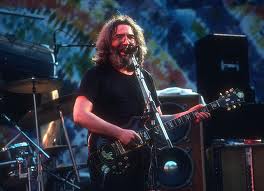
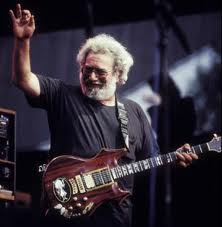
Jerome John Garcia (“Jerry”) died 17 years ago today. For me, and for throngs of Jerry fans everywhere, it is a sad day. August 9 will always carry with it a somber note, a tinge of the blues evocative of some of Jerry’s more melancholy tunes, like Morning Dew or Stella Blue.

For those that don’t like Jerry/The Grateful Dead or understand the appeal, I can only offer one possible line of debate. When you turn on the radio, depending on the station, you hear the same songs over and over again. And what’s worse, generally speaking, you hear the same boring version of said song. Top 40 is the worst offender, bordering on criminal (how many times can you listen to the same friggin’ Adele, Katy Perry, Nicki Minaj or Cold Play song?), but all genres have a standard cue of 50 to 100 songs that their affiliated stations play non-stop, on a virtual continuous loop.

The Grateful Dead offer a song catalog of nearly 700 songs. This doesn’t even include the songs side project bands such as the Jerry Garcia Band (JGB) add to the mix. Furthermore, because the Dead are a touring band that played more than 2,300 shows, pretty much every song in that catalog has many versions.

So Sirius/XM radio station 23 is incredible because they play the full archives of a band that amassed the thickest songbook in the industry. Even though you are wont to hear Sugar Magnolia, Playin’ In the Band, Truckin’ or Jack Straw (among others) quite often, chances are, each time you hear the song in a given month, or even year, it will be a unique version of the song. How you like me now Ryan Seacrest?

And Jerry and his bands were intriguing A) because they played great music; and, B) because you never knew what they would play when you saw them live due to their vast catalog and fearless approach to both writing original songs and covering artists across all genres of music.

A few notes:

Jerry played nearly 3,200 live shows over the course of his lifetime as part of 12 separate entities. Not one of these live shows ever fell on August 9. This is amazing considering the date had no real relevance to Jerry (though it certainly does now to his fans, family and friends) and that he played enough to have just about crammed 9 different shows into every date. So not only is August 9 a terrible day in Grateful Dead history for the obvious reason, but also was a rare date that never had any positive Dead “spin.” And keep in mind that attending even the worst Dead (or JGB) show was better than pretty much anything else you could have done on any particular day.

If you want to troll the net to prove my claim wrong, you may come across two separate shows Jerry may have played, one on August 9, 1969 as part of the New Riders of the Purple Sage, and the other on August 9, 1974 with Merl Saunders. Please note the fine print in the links I attached to each date above (the lostlivedead blog offers a decent argument that the New Riders played a run of shows at the Matrix in 1969 but not conclusive evidence that August 9 was among the show dates, and under the Notes section of the 1974 Merl show, pay attention to the fact that this show was likely played a day or two later, and again, no substantial proof has ever materialized to prove otherwise).

Last but not least:

My wife’s birthday happens to fall on August 9. Since we met, her happiness has always taken precedence over the anniversary of the death of one of my idols. As upsetting as the date once was to me, the fact that the love of my life was born on that same date has changed everything for me. There is positive significance to this date, and I recognize that my life is better because of August 9. You see, my wife is my silver lining of August 9…Jerry was the touch of grey…and we all will get by, and we’ll survive.

And just for fun, I encourage you to read this article.

Have a great day and thanks for reading,

IDROS

46 Comments

Filed under Music

100 Guitar Riffs Tells a Bigger Story Than History of Rock Music

https://i0.wp.com/b.vimeocdn.com/ts/301/495/301495523_640.jpg

Let me begin by stating that Alex Chadwick’s recent viral video is amazing.

In case you haven’t yet seen it (because you are incredibly busy and don’t have 12 minutes to spare; or, you have been living under a rock, or, in the words of the late great Nora Ephron, spoken by Billy Crystal, trapped under something heavy; or, perhaps you just don’t love music…or Rock & Roll in particular)…please do yourself a favor and click this link.

Hypothesis: Alex Chadwick’s 12-minute amalgamation of 100 of the greatest Rock & Roll guitar riffs throughout history and its viral aftermath seem a telling metaphor of everything that is wrong with American society today.

(A quick aside: The last time someone named Chadwick remotely caught my attention was when this guy coached pretty boy Dean Youngblood against violent goon Racki. You may be wondering what that piece of trivia has to do with this post, or with anything for that matter. The truth is, not much. But I can offer you this: The three most notable actors in Youngblood – Rob Lowe, Patrick Swayze (RIP) and Keanu Reeves (yes, he was actually in that flick…seriously…watch it again if you don’t believe me) – all have at least one guitar related credit on their respective resumes.

Rob Lowe is known for his wielding of a different instrument…that sax he laughably pretends to play as Billy in St. Elmo’s Fire. But he also played a role in the movie version of Wayne’s World, which features two guitar playing teenagers…better still, Alex Chadwick and his NPR interviewer, David Greene, reference the classic SNL movie in this recent interview.

The late Swayze, who appeared with Lowe in The Outsiders as well as Youngblood, played a memorable cooler in Roadhouse to a live soundtrack provided by slide guitar phenom Jeff Healey. Many of the artists and songs featured in Alex Chadwick’s 100 licks were played by Healey in that film as well as in Healey’s set lists as a touring musician.

And finally we come to Neo Johnny Utah. We all remember him as Theodore Preston, trying to play the guitar in the cult classic Bill and Ted’s Excellent Adventure alongside the Lost Boy that Edgar Allen Corey Frog killed in the cave coffin in that great 1980s Vampire flick. (Sure, we know…according to the late George Carlin, Bill and Ted’s guitar music would become crucial to the survival of future generations.))

But I digress…as usual. Wow did I digress this time.

As I postulated, Alex Chadwick’s 12-minute amalgamation of 100 of the greatest Rock & Roll guitar riffs throughout history and its viral aftermath seem a telling metaphor of everything that is wrong with American society today.

We live in a hyper-critical world, and just as talented people across all walks of life now have countless platforms to reach an audience in the blink of an eye, so too do masses of talentless, ignorant, lazy and gutless drains on society have the ability to sit on their couches (or, likely, their parents’ couches), inhaling thousands of calories of high-fat snacks while they peruse endless media outlets such as YouTube, Twitter, Facebook, et al. Anonymous people, with a veritable smorgasbord of soapboxes at their fingertips, are free to comment on and critique anything they want, voicing opinions on subjects spanning politics, entertainment, finance, society, sports, medicine, etc.

I love that Chadwick’s video went viral. I love that I can turn on my computer and within seconds, have access to something as beautiful, creative, intelligent and thought provoking as this 12 minute stroll down memory lane via modern rock history. And the vast majority of the populace loved it too, which is echoed in the video’s massive reception throughout the interweb in recent days. Even the comments have ranged from emoticon rich smiles to glowing praise. “Love this,” is one of the more frequent comments associated with the link.

Unfortunately, for as much love and praise as Chadwick rightfully received, there were and continue to be far too many “buts” lingering just beneath the love and praise. People repost the link, or comment on the link because they truly believe it is noteworthy and deserving of additional views by their friends and loved ones, but so many of those re-posters and commenters take the opportunity to critique Chadwick’s journey through rock history.

Sure, my own video would have included riffs from artists such as Bob Marley, Jane’s Addiction, The Clash, Elvis Presley, Lou Reed, Steely Dan, Prince, Peter Frampton, The Kinks, Phish, Radiohead and the Talking Heads…and my version likely would have also omitted some of the artists included or repeated in Chadwick’s list.  I may have even chosen different licks from certain artists. But that’s the thing. For one, I can’t play the friggin’ guitar. But even if I could, criticizing Chadwick for his own taste and hard work is inexcusable and unacceptable.

Go out and create your own musical list. Or create something in your own wheelhouse that might be similarly beautiful and inspiring. And if you must criticize, if that itch just has to be scratched, then save it for those who deserve it…those who never even tried, or who completely failed when everyone…or anyone…was counting on them.

Petty criticism is far from a new phenomenon. People criticize what celebrities wear to movie openings and award shows, and how coaches and players execute down the stretch in games. People criticize how their politicians behave in and out of office and how stupid the endings of groundbreaking television shows are (Lost, The Sopranos).

You know why American Idol and Dancing With the Stars and shows like them are so popular today? It’s because most people alive possess little or no talent in what are deemed to be glamorous fields (music, acting, athletics, art…even cooking, inventing, writing and politics). So today, even the vast majority of us have access to those fields…as critics. These shows empower us all to participate, unqualified as most of us are, and we relish the opportunity. We fork over money to vote, we rant and rave in chat rooms and all over the blogosphere, and we feel it imperative to comment all over the social media world, wasting our own time, and likely the time in lost productivity of our employers, to feel like we are part of something glamorous for a brief moment in time.

This 12-minute viral video captures it all in a nutshell. Alex Chadwick invested thousands of hours learning and practicing the guitar, and then had an idea to compile a list of his own personal favorite 100 rock guitar riffs. Then he practiced his musical list, making sure everything flowed, until it felt right. And then he rehearsed. And when he felt ready to capture his list on video, I am sure he played quite a few takes before getting right, or at least error free enough to publicize.

What took Chadwick a lifetime of practice and countless hours to assemble, posted to the general public in seconds. And hours later, it was simultaneously praised and ripped to shreds. Sure, most people genuinely enjoyed, praised and recommended it to others. But a vast majority if not all of those who have watched and listened to the video all had at least one criticism. For some, this was their first thought upon watching it. For many others, it was perhaps the second thought, shortly after “cool,” or “wow.”

Criticisms primarily centered on what was omitted from the list, in terms of a general who (which artists and bands were not included but should have been), and even entire genres of music that were left out or at least were unfairly represented relative to others. Some criticisms I came across thought the list was too evenly distributed across decades and eras of rock music, others complained about which particular songs by certain artists were and weren’t included. Some found sexist and racist issues with the list and still others felt Chadwick played certain riffs longer than others, which discriminated against certain songs unfairly.

The point is, nearly everyone had a complaint or criticism of some sort. And the tragedy of it is, this is someone else’s list and hard work. There are 300 million people in the United States. All have different tastes in music. And when it comes to rock music, every one of us has a different take on what defines it, who should be included and what eras and artists were/are more significant.

There is a big election coming later this year. Let Chadwick’s incredible video be a lesson to us all. Don’t sit on the sidelines and critique. Listen to the music; appreciate the hard work and personal choice that went into its arrangement. Then take his video as inspiration to create something on your own…to affect change, to get involved, or even simply to get off the damn couch and vote in the upcoming election.

There are more problems than solutions in our world today. I promise these problems will not be solved by people (or even by government candidates and officers) who do no more than criticize others and their efforts. The era of passive criticism must end.

Thanks for reading,

IDROS

2 Comments

Filed under Current Events, Entertainment, Humor, Movies, Music, Politics

This Israel: For those who bleed blue and white, and more so for those who don’t

As the London Olympics 2012 approach, and the 40th anniversary of yet another monumental and horrifying chapter in Jewish world history is more or less swept under the international community’s proverbial rug, I wanted to write a blog entry focused on Israel.

It is difficult to articulate what Israel means to me. I know I get just as emotional and animated when I read or watch news stories involving Israel as I do for similar coverage regarding my own home nation. Maybe even more so at times.  Leave it to celebrities to drive this point home.

In an era where everyone has a soapbox, I can sometimes appreciate when the Hollywood elite and other famous personalities rally around a pressing issue or criticize our US government (think The Dixie Chicks, Sean Penn, George Clooney, etc.); other times I downright loathe celebrities using their fame as a platform to demonstrate just how vapid and ignorant and truly awful they really are beyond their stage personae (think Hank Williams Jr., Ted Nugent, David Tyree and of course, Mel Gibson). Sure, my own personal politics determine, to some extent, which celebrity opinions are relevant and which are complete rubbish. But the point is, I care enough about my own country, its policies and its leadership (questionable as the latter two may be) to give a rat’s ass what people say about them…especially famous people. (Sadly, I actually do care what celebrities say because of the rise of the Kardashian empire, Jersey Shore and other similar blights on society that catapult brain-dead nobodies into our homes and lives each day and the terrifying fact that so many people watch and listen to every word some of these reality troglodytes have to say…and I fear that these naïve people, who have the same right to vote that I do, will actually heed or adapt some of the scarier political and societal “ideals” espoused by tabloid fodder that couldn’t name one Supreme Court justice, their own State Governor or the last president etched on Mount Rushmore if you spotted them the first three).

Oddly, I am even more sensitive to what celebrities say (and do) regarding Israel, its government and its policies than what they say about the United States. So in the spirit of the coming London Olympics, two recent examples come from celebrities living in none other than Jolly old England. First, the Material Girl opened her most recent MDNA tour in Israel and created quite a stir. (Yes, she is American…never accused her of being anything else. But Madge does live in England, and she has conducted most interviews and speaking engagements since she moved across the pond with an inexplicable British accent). Two noteworthy nuggets made headlines and dominated YouTube following her tour opener:

1)      Before playing her first song, she greeted the crowd with an eloquent, heartfelt, non-partisan speech that basically was a prayer for peace between Israel and the Palestinians. I loved what she had to say (watch it here).

2)      During one of her new songs “Nobody Knows Me,” the video screen on stage showed French politician Marine Le Pen with a swastika emblazoned over her face for a millisecond..subliminal stuff. Known to be a vocal anti-Semite, Marine’s father, Jean-Marie Le Pen was convicted of condoning Nazi war crimes earlier this year. Seriously, Jean-Marie, the French equivalent of Mel Gibson’s father, came very close to winning the French Presidential election in 2002…that’s right, a friggin’ Nazi-sympathizer came unacceptably close to attaining the highest office of a nation with a SECURITY COUNCIL VOTE in the UN! WTF? No wonder France rolled out the red carpet for Adolf 70 years ago, and anti-Semitism continues to run rampant between the Alps and the Pyrenees. And now, 10 years after her fascist father won, Marine garnered nearly 20% of the popular vote in the wake of Sarkozy’s scandal-ridden term, setting the stage for the daughter of a Nazi to muster votes for her party’s parliament hopefuls.

*The best part of Madonna’s clever and opinionated “photoshopped” commentary was the reaction it received from France, whose right-wing party (Marine’s party) warned the pop icon that if she tried any of that bullsh$t in France they would sue the crap out of her highness. (Read this for more)

On the other end of the spectrum, Emma Thompson and her recent infantile attempt to grab headlines reeked of putrescence. I have no problem if a celebrity (or anyone, really) has a well-reasoned, educated argument against Israel’s policies toward the Palestinians (there are very few…and I mean both acceptable arguments and people who have voiced them over the years). I don’t agree with everything Israel’s government, army and citizens do when it comes to that difficult and tension-filled situation. However, I have a serious problem with snaggle-tooth Thompson’s take on the matter. You see, Israel’s premier theater company, Habima, was set to participate in a Shakespeare festival at London’s Globe Theater last month. But Ninny McPhee vocally joined and spearheaded a list of debatably impressive theatrical stars in boycotting Habima’s participation. And why? She and her lackeys claim it was because Habima failed to participate in a boycott of a “controversial” cultural center opened in Ariel, a West Bank settlement, in 2010. So, in other words, a boycott of a group that failed to boycott. In actuality, Kenneth Branagh’s cuckqueaned ex-wife and others simply do not like Israel or the Jews. There really can’t be any other explanation. Chinese theater groups were not boycotted, and China’s long tradition of stellar human rights policies was never questioned. And adding insult to injury, a Palestinian theater company, Ashtar, was invited to participate and met no similar resistance.  Ironically, Habima was slated to perform Shakespeare’s “The Merchant of Venice,” a work notable for its anti-Semitic undertones, at the festival. (Another irate voice)

But I digress….

So what does Israel mean to me?

Here are seven words that immediately come to mind:

Pride: You know when you walk down a street full of run-down properties, where tall grass and weeds dominate the yards, the driveways are cracked, litter is strewn all over and the houses are all dilapidated…save for one. One home that stands proudly in spite of those that surround it; one home whose owners consider it a sacred, meaningful source of personal pride?

Appreciation:  You know when you see true heroes acknowledged, whether in person or in books, movies or the news? Like Captain Sully, or Oscar Schindler, or all of the fire and police men on 9-11. People whose bravery and courage are undeniable and inexplicable in the face of grave danger; people who you want to hug and tell them “thank you,” even if their acts do not directly affect your own life. And the kicker is, you don’t really understand these people, how they can be so incredibly selfless and unflappable in the face of evil and unimaginable events. And yet, you are eternally grateful that people like that exist, your faith in humanity is restored or confirmed, and you know the world is a better place because of them.

Admiration: Who doesn’t like a great underdog story? Ever since David slew Goliath (and likely even before that), the thrilling prospects of an upset have tantalized our sensibilities as humans; we sympathize with and even favor those with fewer assets and resources, facing monumental and improbable tasks, to somehow prevail against all odds. What if there was an outcast in your high school, someone who few people liked (or at least were willing to admit they liked publicly); someone with limited strength, intellect and charisma? And what if this person worked tirelessly, in the library, in the gym and with a life coach, and humbly rose to achieve impressive accolades in numerous areas of his or her high school’s (and community’s) academic, social and athletic arenas? This person probably wouldn’t realistically hijack an 80s movie and become captain of the football or cheerleading team, valedictorian of his or her class, king or queen of the prom and class president; but what if this person graduated in the top five percent of his or her class, earned varsity letters as a meaningful contributor to three athletic teams, won top honors at the science fair, was elected to class office, secured a leading role in the school musical, had a part time job helping his or her school district clean up its parks and playgrounds and also volunteered at the local hospital, improving the lives of cancer patients?  (“Student’s” full resume here)

Sanctuary: Have you ever played Musical Chairs? What if, for millennia, in a global version of the game, whenever the music stopped, it was always one specific group of people who were left without a seat? Then, one sad but hopeful day, what if a plush seat was proffered, a comfortable old easy chair that had historical and traditional significance? Providing the unconditional love of a family, the security and comfort of a home and the acceptance and understanding of an old friend, said seat opens its arms and footrest (read: heart) to an often persecuted and much maligned and misunderstood group of people, regardless of  geography, economic strata and dedication to and observance of religious scripture and tradition. Best of all, this “chair” remains eternally open, unlocked and unchained to a road-weary people who have wandered with nowhere to rest for too many years.

Hope: You know when you’re watching a sporting event…any sport…and the team or player you are rooting for has been getting crushed for the entire game, but suddenly there is a spark, or a noticeable change in momentum? You almost turned off the television, or left the stadium, but you didn’t. There is a lot of ground to make up, but the possibility for something remarkable, something special begins to seep into your consciousness.

Frustration: Does it bother you when you hear negative rumors about someone, something or somewhere you care about? What about when you know the rumors are vicious, nasty lies spread by stubborn, ignorant or just plain stupid people? What if seemingly everyone that hears or reads these rumors believes them? What if the victim of said rumors has been abused, bullied, libeled and slandered since the day he or she had been born? What if the vast majority of those around the victim simply ignore the constant injustices being promulgated? Furthermore, what if most people, and worse, the global media, even piled on with undue rhetoric and even tacit praise and assistance of the bullying and terrorizing? What if the verbal abuse and rumors lead to violence? And most mind-boggling of all, what if the most virulent and hate-filled rhetoric and abuse is hurled by parties with access to game-changing technology that could literally destroy the victim and anyone close to him or her?

Fear: Imagine sending a beloved child away to school, or camp or any other activity away from home. Now imagine you receive word that your child is being mistreated, bullied, tortured or abused. What if any attempts you make to talk sense into the school or camp directors, to negotiate a non-violent, peaceful experience for your son or daughter are met with resistance, general refusal to negotiate or worse still, the directors casting all blame upon your child? You would pull your child out of said camp or school, obviously…but what if you couldn’t? And what if the legal team or security detail you hire to help to protect your child is the only friend or ally your child will ever truly have? And what if even that “ally” becomes corrupted by new leadership that is more interested in appeasing the camp or school directors and the other campers and students than in the safety and well-being of your child?

Happy Flag Day,

IDROS

1 Comment

Filed under Current Events, Entertainment, Movies, Music, Politics

And in “The End” an iconic band broke up…Reflections on the final song recorded by The Beatles

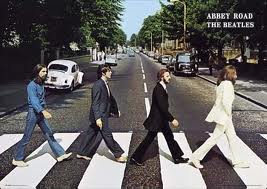
It was the worst of times for Rock and Roll’s greatest act. But even as their dissolution hung ominously over the Fab Four, they decided to put their differences aside and head into EMI Studio on Abbey Road for one last hurrah, just like they had so often in the good old days of the preceding eight years and eleven albums.* (Please reference footnote below for more historical context)

The Beatles’ grand finale, Abbey Road, was just the bittersweet opus fans, critics and band-mates alike would universally agree delivered a fitting encore to perhaps the greatest Rock and Roll act to ever grace a stage or studio. A sweeping and ambitious album comprised of two stylistically different sides, Abbey Road showcased the greatest strengths of the band, individually and en masse.

Most notable in Abbey Road was that the four distinct personalities that came to define John, George, Paul and Ringo shone brightly throughout the album, musically, lyrically and stylistically. This was most evident, and perhaps most hauntingly appropriate, in the song that would close the album (or at least was initially supposed to), the final segment of the epic Side B medley, aptly named “The End.”

The Beatles’ public personas were encapsulated early on in their careers with nicknames that emerged:

John: The smart/witty one

George: The quiet one

Paul: The cute one

Ringo: The funny one

But there was more to each of them, obviously, and their personalities became more defined as Beatlemania enveloped the world. John was intelligent, but he also was a rebel and a dreamer, deeply profound and affected by the world around him, the more creative and less overt leader of the band. George was quiet and shy at times, but also was mysterious and spiritual with a jocular side. Paul, though known for his “puppy-dog eyes,” was seen as a clean- cut, romantic, perfectionist – the driven, technical leader of the band. And Ringo was funny, though no more so than John or George by all accounts. Ringo was a people pleaser, the consummate team player and the veritable backbone of the band.

Tom Robbins, in his 1980 classic, Still Life With Woodpecker, opined through his eponymous anti-hero, that you can derive pretty much all you want to know about a person by asking them who their favorite Beatle is and listening to their answer: “Bernard Mickey Wrangle had developed a psychological test of his own. It was short, simple, and infallible. To administer the test, merely ask the subject to name his or her favorite Beatle. If you are at all familiar with the distinct separate public images of the four Beatles, then you’ll recognize that the one chosen reveals as much about the subject’s personality as most of us will ever hope to know.”

Just as the Woodpecker’s test has proven its merits over the years in our own armchair psycho-analyses of the people in our lives, Abbey Road’s release revealed the album to be a Rorschach test or dream interpreter in its own right. The album was like a compilation of inkblots or dreams that revealed a great deal about the personalities of each Beatle. And if Abbey Road was a dream interpreter, judging by its opening lyric, “The End” was the key dream interpretation on that test that led to a major breakthrough.

“The End” emerged as a virtual highlight reel of the great band from Liverpool, stunningly crammed into just over two minutes of smile-coaxing, heart-warming musical genius. The song’s central theme, love, is a running theme throughout the Beatles’ vast songbook. But the structure and free-spirited curtain call nature of the tune set it apart.

As the final song recorded collectively by the four principles of the band, “The End” provided a forum for each of their individual personalities and musical strengths to shine in one last masterful performance. Each Beatle has at least one solo, during which his own distinct style radiates. Even Ringo, who always maintained a vehement aversion to solos, preferring instead to target his percussion toward whoever sang or played the melody in a particular performance, has a stand-out solo sequence on the record. Apropos to Ringo’s personality, his solo was actually recorded with tambourine and guitar accompaniment, and the other instruments were later muted during editing to give the effect of a Ringo drum solo. Ringo Starr was true to himself even as “The End” showcased a “hypocritical” moment, leaving listeners with a stunningly honest portrayal of Starr despite being tainted by a bizarre feeling that something is amiss.

And John, George and Paul perform a rotating sequence of three two-bar guitar solos which flow out of the “Love You” chorus about a minute into the song. Each solo echoes the personality of its artist, and in three separate two bar segments (about twelve cumulative seconds of virtuoso wailing for each of them), the listener can truly differentiate who is playing. Paul comes in with flawless, stinging licks reminiscent of his guitar work on earlier tracks such as “Another Girl” and “Taxman.” George uses a technically advanced slide technique that was becoming his trademark as he plays off of Paul’s lead in each go around. John‘s contribution was rhythmic but heavily distorted, a nod to his guitar work on “Revolution,” and signifying his growing dissociation with his band mates and his “former life.”

Truly eerie in their guitar solo sequence (and I apologize for this morbid correlation) is the order in which they play. Paul takes the lead, followed by George with John closing each sequence. And in their true “end,” it was John exiting first, George following and Paul, still with us, who will bow out third. Paul did get the “last word” in “The End” by penning a lyric to close the song (and the album…at least in its original layout). Drawing inspiration from one of his heroes, Paul decided to write a rhyming couplet in the style of the Bard. Its message is timeless.

Sure, the song’s powerful ending lyric seems to speak to society at large, a philosophical directive to which all of us could and should relate and adhere. But even more so, the equation set up by Paul’s couplet – “And in the end, the love you take is equal to the love you make” – resonates as the defining credo, even epitaph, of four men who forever changed the musical landscape of our world. For ten years, they put everything they had into their music. Malcolm Gladwell’s ten thousand hours in dark clubs throughout Europe, and thousands more in the studio and on arena and stadium stages around the world. And in return, they received the love and adulation of a worldwide fan base that literally could not get enough. The Beatles’ music was love: love of being musicians, love of creative freedom, love of women, love of spirituality, love of rock and roll, love of rebellion, love of their fans and certainly, at one time, love of one another. We as fans all felt that love, and continue to feel it even today every time we hear one of their songs. We felt their love and loved the band right back. And if their continual popularity and relevance in today’s art, culture, literature and of course, music is any indication, we still love the Beatles today as much as ever.

*Historical background leading up to the release of Abbey Road:

Friction already created a poor showing on their tenth album, The Beatles, now highly regarded as the White Album, but critically lambasted upon release as disjointed and sloppily performed and generally dismissed as ego-driven solo efforts thrown together in a mish-mash of discontinuity. (And that, in a nutshell, proves how incredible the band truly was, because The Beatles has come to be included among the greatest albums of all time in all critic and fan-based music-themed articles, rankings, research and analyses that matter.)

And their twelfth album, Let It Be, though released after Abbey Road, was recorded, in large part, before Abbey Road had been. Originally slated to be released before Abbey Road in mid-1969 as Get Back, the Beatles were displeased with the sound and feel of the cut and shelved the effort. By all accounts, bad vibes, discontent and a general festering of acrimony boiled over throughout the recording and editing of Let It Be. Some of the songs from the Get Back recordings were released as singles before Phil Spector came in and re-edited and mastered the album, renaming it Let It Be. Let It Be drew mixed reviews at the time of its release and to this day is seldom included among any short list of the band’s greatest albums. A film of the same name was also released, and has gained mass notoriety for vividly capturing a number of conflicts among band members during the making of the album, and has often been referred to as a documentary intended to highlight the making of an album, but instead diagrammed “the break-up of a band.”

The “why” is debatable. Perhaps it was all Yoko’s fault, as many Fab Four fans like to opine. Maybe creative differences ran amok and were the culprit. Undoubtedly, Paul and John had a very different approach to music and leadership, which helped to inspire the varied styles and depth of musical genius throughout the band’s impressive oeuvre, but also laid the foundation for the Beatles’ demise as well. A grueling tour schedule and constant in-your-face idol-warship that accompanied Beatlemania took its toll on everyone, particularly George, who was retreating more and more into a spiritual lifestyle in the late 1960s. And the demands of fame in general were exhausting, from financial negotiations to promotional obligations. Finally, these are four people who, along with their few trusted insiders such as Brian Epstein (whose accidental overdose and death in 1967 caused problems of its own), and George Martin, spent a great deal of time together throughout the 1960s. So much time, in fact, that any petty disagreements, differences and moments of weakness that emerged became magnified exponentially.

Regardless of reason(s), in mid-1969, the four principles knew the end was nigh. After the disharmony and infighting that plagued the band’s previous two recording efforts, Paul went to George Martin, long-time producer and music arranger for the band sometimes referred to as the Fifth Beatle (though Paul maintained “if anyone was the Fifth Beatle, it was Brian [Epstein]”), and basically pleaded that the band needed to end on a high note and get together to make an album “the way they used to.” Martin agreed, and Abbey Road was born.

Additional sources and fun links:

1970 Rolling Stone Interview with John Lennon

1980 Playboy Interview with John Lennon and Yoko Ono

1971 Life Magazine Interview with Paul McCartney

1969 Interview with George Harrison in Apple Offices

1977 Interview with Ringo Starr

2007 Review of “The End” by Richie Unterberger

1 Comment

Filed under Entertainment, Music

Onions! And Other Musings on the Madness of March…

Most of us who work in an office love this time of year. Even if we didn’t attend a college with a competing interest in the NCAA tournament, we all have a favorite or two. And gambling makes sure this is true. Hard core fans (read: gamblers) suddenly come down with some rare strain of influenza or Montezuma’s revenge or laryngitis that renders them incapable of making it into the office for the first Thursday and Friday of the big dance, and they sit on their couches or head out to the local sports bar and medicate their “ailments” with beer and chips and wings as they devour twelve hours of hoops each day in absolute heaven.

OR, for those less fortunate (read: those who have too much responsibility to bail on work, those who frivolously used up their personal/vacation days in the first two months of the year, or those who fear getting fired in such a bad economy), millions of other fans of college hoops sit in their cubicles or offices, glued to their computer screens, toggling between their work and every sporting website their office firewall allows them to open, following the action as best they can, counting down the hours till five, when they too can join the throngs in front of the boob tube.

That time of year has arrived when productivity hits a wall, where focus is completely lost and a lack of effort likely erases whatever progress or momentum had been achieved in January and February. Even the most anti-sports and/or unknowledgeable or ambivalent about anything sports related has a fighting chance, or more accurately, is among the favorites to win their respective office pools. They pick based on uniform colors or school mascots, or let their six year old children fill out their brackets…and invariably, much to the testosterone-fueled sports nuts’ chagrin in every office across the USA, they win the pool. (Read this recent article about How to Intelligently Talk About March Madness – Even If You Sort of Don’t Care)

I remember during my time in a past life, working in a Wall Street office that loved to gamble on anything and everything. We had a pool for every sporting event, including golf. We had pools for office eating contests, including one horrific Friday where the brass bought like a thousand White Castle sliders and the winner of the bacchanalia (whoever ate the most) took half of the pot…the other half went to those who bet on the correct “victor.” We even had pools within pools, or allegorical pools as I fondly recall christening them.

One day, one of the elevators in our building got stuck during lunch time. Two of our staff were on board during the mishap. This was before cell phones, mind you. We got a call from the lobby that an elevator lost power between the 15th and 16th floors, and that they believed two of our employees were among the stranded (they got a call from the elevator phone relaying the info). Anyway, of course this bit of bad luck for the two on the elevator quickly morphed into opportunity for the rest of us. We started a pool for picking the precise time the elevator would be fixed and our colleagues would make it back into the office…Price Is Right rules, closest to the time either of our men stepped into the office without going over would win the pot. I did not win. They finally emerged, together, three hours and 23 minutes later, at 3:36pm. I had wagered on 2:50. Oh well.

(This article highlights some other humorous office pools some have participated in over the years)

But I digress. I love March Madness. It’s a great sporting event that truly mimics the entropy of real life. Anything can and does happen. Every year, millions root for one of many underdogs, and we all get rewarded. And every year we get amazing match ups with heart-stopping finishes. And we get to gamble…and lose…to a person we know in our office that has no business winning.

So, in honor of March Madness, please find my unofficial list of all things that evoke images of Madness from the annals (two “n”s for the sick-minded) of pop culture, sports, politics and general trivia. I wanted to make a bracket so you all could pick match ups and crown an eventual winner, but alas, I am a simple blogger with very little technical know-how. So I give you a list, ranked from least madness inspiring to most. Feel free to make your own brackets. Or print it out and use it as kindling. Or completely ignore it. As usual, the order of our entries is debatable, and I welcome friendly discourse:

26) Mad Cow Disease – A horrifying scourge worthy of the most pessimistic writers of Hollywood and fiction novels alike, it gave us quite a scare back in 2001 and still lurks in the darkest corners of civilization as some of the best fodder for the anti-carnivorous set and even companies like Chick-Fil-A.  So awful, in fact, that it couldn’t make the top 25 of this list;

25) Mad Dog – that awful vomit-inducing budget pseudo liquor some of us were unfortunately introduced to in our college days, and a staple of many a homeless drunk;

24) Reefer Madness – 1936 film which dramatized the evils of Mary Jane. But what about the evils of this film, or those hypocritical politicians who continue to hide behind the Constitution when it comes to guns, but fail to recognize that our forefathers, the same brilliant men who wrote and fought for that very document, also grew and smoked chronic themselves?

23) This blog article called Lent Madness from 2010 (you need to scroll down a little);

22) Or this one about My Little Pony Madness  – actually, some of the inventions captured here are pretty cool;

21) It’s a Mad Mad Mad Mad World – 1963 star-studded comedy not unlike the Cannonball Run/Gumball Rally movies about a race for a large sum of money – in this case, stolen money.  It features Spencer Tracy, Milton Berle, Sid Caesar, Buddy Hackett, Ethel Merman, Mickey Rooney, Buster Keaton, Peter Falk, Jimmy Durante, and many more;

20) Space Madness;

19) Mad Love – 1995 film starring Chris O’Donnell (fresh off his Scent of a Woman acclaim) and Drew Barrymore. Not a bad account of mental illness wrapped up in a love story if you are into that sort of thing.

18) Mad Dog and Glory – 1993 film starring Bill Murray, Robert DeNiro and Uma Thurman. Underrated, in my opinion, but still, not in the respective top five films of any of the principles.

17) Mad Money, now in its eighth season, is a finance television program featuring the frenetic histrionics of Jim Cramer. I am not a big fan, but realize some of you might be and thus this ranking is up for debate;

16) Madmortigan – Val Kilmer’s warrior in the notable George Lucas semi-flop Willow. Love hearing the eponymous dwarf’s genuine awestruck giddiness as he says, “Madmortigan, you are great!”

15) Mad About You – One of very few successful tunes a drugged out Belinda Carlisle was able to muster without her other Go-Go girls (from her first solo album, Belinda, released in 1986, and topping out at #3 on the Billboard charts).

Also, a moderately successful if over-hyped sit-com featuring Paul Reiser and Helen Hunt. I prefer Carlisle’s tune to this schlock, but judging from its 7-year run during NBC’s glory years, millions would probably disagree.

Finally, Mad About You is a lesser known track off of Sting’s album, The Soul Cages;

14) This blog entry on top movie descents into madness, even though it fails to mention Apocalypse Now, Barton Fink and Falling Down….so wrong. It’s a good list, but greatness eludes it for what it fails to recognize. Omitting those three films on a list of descents into madness is the very definition of madness;

13) Mona Lisas and Mad Hatters – Elton John song from 1972 Honky Chateau, in which Bernie Taupin lyrically recalls his first visit to New York City, during which he hears a gun go off near his hotel window, and responds to a Ben E. King song called “Spanish Harlem” with a negative bent;

12) The oddity that is the Mad Martian Museum of Modern Madness;

11) Madness, the 1980s British band that brought us “Our House” (and fittingly, also had an album named Mad Not Mad);

10) This collection of journal entries, “March Mad-NESS,” from Funny or Die;

9) The Madness of King George, another of 1994’s incredibly rich stable of films, starring Nigel Hawthorne and Helen Mirren, who won the Oscar for Best Supporting Actress. The film also won the Oscar for best adapted screenplay;

8) M.A.D.D. – Big ups for mothers who care. Hard not to side with moms on this one. As a one-time member of S.A.D.D. myself, I debated putting this one higher on this list. So yes, this was a hard-eight;

7) Mad Max – Mel Gibson is a douche. But in 1979 we didn’t know that. So if you can take yourself back to that simpler time, pre-anti-Semitic meltdown, and marvel at the genius of the character, you have to admit Mad Max was a post-apocalyptic bad-ass;

6) Mad World – Perhaps my favorite Tears for Fears song, chillingly remade by Gary Jules for the movie Donny Darko, and also covered most recently by surprise phenomenon Susan Boyle;

5) Mad Dogs and Englishmen – Joe Cocker’s 1970 live album of mostly cover songs, including The Rolling Stones (Honky Tonk Women), Traffic (Feelin’ Alright), The Beatles (She Came in Through the Bathroom Window), Leonard Cohen, Isaac Hayes and Otis Redding;

4) Mad scientists: Portrayed in hundreds of books, movies and television shows, from Dr. Frankenstein to Dr. Jekyll to Dr. Moreau to Jeff Goldblum’s Brundle in The Fly (check out this link…and this one);

3) Mad Men;

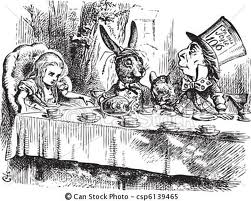
2) The Mad Hatter – One of Lewis Carroll’s most frighteningly awesome characters, Carroll never actually dubs The Hatter with the crazy modifier. Rather, both the Hatter and March Hare are referred to as “both mad” by the Cheshire Cat. Both characters first appear in Alice’s Adventures in Wonderland, in the seventh chapter titled “A Mad Tea Party.” The phrase “mad as a hatter” pre-dates Carroll’s works; and,

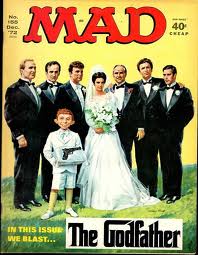
1) MAD Magazine – Always a reminder of my care-free youth, this ad-free humor mag featuring Alfred E. Newman, Spy vs. Spy, celebrity lampooning at its infantile best AND…my first foray into centerfolds, takes me back to days at summer camp, when a care package filled with candy and a few issues of MAD proved just how lucky I was to have the best parents ever.

See you in April,

IDROS

2 Comments

Filed under Entertainment, Humor, Movies, Music, Sports

Is Anyone Else As Concerned About the Sudden Ubiquity of Chris Brown As I Am?

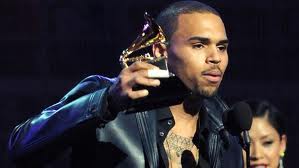
In the course of two weeks, this troglodyte has virtually usurped the entertainment world spotlight right out from under the Kardashians. He dominated the Grammy’s with not one, but two “live” performances AND walked away from the spectacle hoisting a shiny phonograph statue of his own – for best R&B Album.

He then brazenly used this apparent validating moment to opine via twitter, “HATE ALL U WANT BECUZ I GOT A GRAMMY Now! That’s the ultimate F**** OFF!”

Sure, he later backtracked, deleting the above communiqué and replacing it with this gem, “IM BACK SO WATCH MY BaCK as I walk away from all this negativity #teambreezygrammy.”

The thing is, it is difficult to “watch someone’s BaCK” when they are being forced down your throat at every turn.

Cut to last night’s NBA All Star Game Halftime show, and who joined Miami hip hop native Pit Bull on the main stage? Sure enough, it was that thorn in the side of battered women everywhere – Christopher Brown.

I have no problem with redemption and giving people second chances. But I do have a serious problem with this sudden reemergence of Brown…on many levels:

A)    Some ridiculous “women” (read: infantile ignorant girls) got so caught up in the hoopla surrounding Brown that they literally begged to be beaten by the pop-star via twitter! (I really wish I made this up…but click here to be VERY disturbed);

B)    Chris Brown served no real time for his crime. Community service and probation are hardly paying his debt to society like people such as Michael Vick (super-douche doggie Hitler) and Plaxico Burress (and Ja Rule, Lil Wayne and DMX in the hip hop profession) have done;

 C)   The theory that Rihanna has apparently forgiven her accoster, so perhaps society as a whole should too. Seriously? First of all, there are millions of documented cases of battered women who “forgive,” “love” and “protect” the men who abuse and beat them repeatedly, many times within inches of their lives, and as a result, allow the cycle of abuse to continue and fester for far longer than it ever should. Rihanna may or may not fall into this enabler category, but who says she doesn’t?

D)   Whatever Rihanna’s motivations to forgive and forge a new relationship with the man who bloodied and humiliated her and threatened her life, be they spiritual, sexual, love or business related, they are misguided and appalling. I am horrified at the message this sends to battered and abused women worldwide. Even if this is purely a business play, and it may be – god knows this reconciliation has garnered plenty of attention – it is akin to a family who loses a child due to cancer caused by a company that polluted their neighborhood (think Erin Brockovich type stuff), that then forges a business relationship with that same company for mutual financial gain…sickening;

E)    More to the point above, for the most part, celebrities are role models, whether they want to be or not. Sure, celebrities, for better or worse, must deal with brutal life events in the public eye, and I realize this is difficult and I even sympathize with many celebrities at times (like with instances of domestic violence, funerals and difficult situations arising with their children).

But I absolutely shudder to think of the reaction among impressionable children and present and future women abusers worldwide who are using this sudden rebirth and proliferation of all things Chris Brown as validation and vindication for their own actions and thoughts. To any ignorant or naïve male, and judging by the state of our world right now, there are billions of those, it would seem that what Chris Brown did to Rihanna is no big deal (see A) above);

F)    I will even concede that while the masses hurl slings at Brown and Rihanna for their behavior and criticize the Grammy’s and NBA for showcasing an awful man, our attention and concern would be far better spent focused on raising awareness, money, protection and help for the millions of non-celebrity women who are battered and abused every day. So true!

That said, this is a travesty. People like Brown and Rihanna make millions because of star-worship in our culture. And both of their actions in this nauseating relationship are reprehensible and are being watched and scrutinized by millions of impressionable people;

G)   Apparent ambivalence by our populace and community at large regarding domestic violence and the horrific abuse, assault and battery of women that leads to more than THREE DEATHS DAILY in the USA alone is reflected by an even more terrifying phenomenon – A LARGE FACTION OF OUR GOVERNMENT IS NOW FIGHTING TO ABOLISH THE VIOLENCE AGAINST WOMEN ACT, a bill first introduced in 1994 to end violence and abuse against women and to protect all victims that face this senseless and barbaric plight.

Senator Leahy (D-V T), who is from Vermont and obviously supports the VAMA and who is leading a bill to increase the act’s reach, says the act’s opposition, primarily Republicans (go figure), argue that the bill aims to “protect too many victims.” Are you friggin’ kidding me? For more on this disturbing story, please click this link;

H)   Roman Polanski sexually abused and raped a teenage girl thirty five years ago, was arrested and convicted, and subsequently fled to Europe to avoid sentencing. He is no longer welcome in his own country, forced to live a life in exile. Sure he was awarded an Oscar for making The Pianist, a wonderful movie. And that is fine. Talent is talent, whether wielded by good or bad men or women. But Polanski isn’t thrust into my living room three times in two weeks on two of the bigger stages in the world, and he never will be; and,

I)   Chris Brown’s music, by and large, sucks (My own definition of talent is pretty simple…Is our world a better place with Chris’ music in it?).

Thoughts?

Thanks for reading,

IDROS


6 Comments

Filed under Entertainment, Music

Movies by the Numbers…

In the spirit of Oscar season and because I love movies as much as the next person, I figured I would take the time to compile a list of sorts for your entertainment. I am sure similar lists and themes have been explored before, but hey, why can’t mine be better? Not every idea has to be original to succeed (go watch most movies or television shows and this will be obvious) – creators, authors, actors, directors and even singers only need to bring a fresh perspective or add value to an old and/or tired premise to breathe new life into it and find an audience.

So here’s my list of the greatest movies of all time, with a numerological bent.

I will count down from twelve, the movies that in my opinion are the best of all time AND include the number on the list to which they correspond – i.e., number twelve must contain the word or number twelve (12) in its title, and number eight must contain the word or number eight (8), etc.

Why twelve, you may ask? Well because beyond twelve the options become limited, if available at all, and I wanted the list to be cohesive, consecutive and contain films that could actually be included on a list defined with the words “greatest” or “best” and not evoke laughter, ridicule and scorn.

Just to be clear: This is not a list of my favorite movies of all time (or someone else’s).

The rules follow:

Numbers that represent sequels do not count. If they did, The Godfather II and Star Wars Parts IV and V would clearly represent their respective numbers…so allow this example to acknowledge those great films without clouding our list.

Homophones do not qualify – especially nauseating plays on words and puns, ala Look Who’s Talking Too, and yes, I know this particular example also violates the first rule above anyway; but in terms of actual contenders, we cannot consider Hitchcock’s classic, The Man Who Knew Too Much, The WWII epic A Bridge Too Far, nor Clint Eastwood’s For A Few Dollars More.

Numbers that are part of larger numbers are impermissible. This unfortunately disqualifies classics such as 2001: A Space Odyssey, 1984, 48 Hours, 300 and A Miracle on 34th Street.

Ordinals, or words representing the rank of a number, do count for our purposes, so movies featuring words like “first,” “second” or “third,” etc. are fair game.

Any movie starring Vin Diesel is automatically disqualified (and yes, there were a couple decent movies in his filmography, but none of them had numbers in its title).

So here goes:

12) Ocean’s Twelve was the worst of the Ocean’s trilogy. 12 Monkeys was underrated and almost won my vote. Brad Pitt, who must enjoy movies with numerical titles, was in both. But for my money, Sidney Lumet’s courtroom drama, Twelve Angry Men takes this slot in a split decision.

(I will give props to The Dirty Dozen because it is a great film worth noting and remains one of the best WWII movies ever made. But we can all agree that though dozen is another word for twelve, it is not the word twelve, the number 12 or the ordinal, twelfth, and thus can’t win).

11) Ocean’s Eleven. Maybe I am out of line here, but I prefer the remake to the original.

10) There are really only two candidates worth considering here: Ten and The Ten Commandments. As good as Bo Derek looked in her hair beads, this one wasn’t much of a contest. The late champion of our Second Amendment right to pack heat, and his epic Old Testament tale of Exodus is one of the more treasured American films as is evidenced by its annual run on national television each spring around the celebration of Passover. (Other films that were considered and immediately discarded were 10 Things I hate About You, Heath Ledger RIP, and 10 To Midnight, one of Charles Bronson’s weaker vehicles.)

9) There will be widespread disagreement here. I know it, and frankly, I invite it. There are a slew of movies that could contend here, but not one is jaw-droppingly strong. To me, this quickly became a three horse race between a workplace comedy, an underrated and smartly written science fiction movie and perhaps the sexiest movie ever made.

9 to 5 is a very good movie. I enjoyed it. I am sure you all did too. But after serious consideration, I couldn’t crown it, even with the extra pressure exerted by Dolly’s assets. And 9 ½ Weeks, awesome as it was, really violates our third rule, which eliminates numbers that are part of larger numbers. Without that rule, I think the best soft-porn movie ever made would have nailed down this slot. But alas, rules is rules.

So our winner is District 9. What? You may be thinking. Some of you are seething. The sappy among you might even be singing the praises of 9 Months, or the musical romp 9. But District 9 was a great movie. Sure it was violent, and science fiction is not for everyone. But neither are musicals and Hugh Grant movies. District 9 was a solid metaphor for Apartheid policies and atrocities that plagued South Africa for centuries, and that still linger today throughout the African continent. And it was a funny, poignant and wildly entertaining movie.

(I also considered The Whole 9 Yards for like a second. Very good movie. But after recalling Rosanna Arquette’s awful French accent and Matthew Perry just playing his Canadian dentist role as Chandler, I simply couldn’t associate this movie with the three contenders above).

8) Another three horse race here. This one features three dark, edgy movies: one about our national pastime, one about the hard-scrabble life of a down-on-his-luck gambler, and one about the mean streets of Motor City. 8 Mile was gritty and surprisingly well-acted by Marshall Mathers. But despite being strong enough to contend, Eminem’s free-style rap film should be happy to have even been considered alongside the two other stalwarts.

Eight Men Out masterfully captured the Black Sox scandal and a shocking era of sports and corruption in America. But my guess is that only 50% of our population really appreciates this film. And for that reason…

Hard 8, the coming out party and first full-length feature film written and directed by Paul Thomas Anderson, was and still remains an underrated and underappreciated movie. Glimpses into PTA’s genius bombard us from the moment Philip Baker Hall approaches a downtrodden John C. Reilly outside the diner. Samuel Jackson was still riding his Pulp Fiction high, and Clementine was really the first substantial role for Gwyneth Paltrow, who was dating the numerical movie title king, Brad Pitt, when Hard 8 hit theaters.

(Of course I considered Fellini’s 8 ½, but for the same reason 9 ½ Weeks was disqualified above, Fellini’s opus failed to make our list.)

7) There are five legitimate contenders here, one of which features Brad Pitt. And there is another movie that failed to live up to the top five, but that is good nonetheless, and also features Brangelina’s Y chromosome.

Se7en is awesome. It has the word AND the number seven in its title, and Brad Pitt in its credits. It should win this slot just on those merits. But it doesn’t. At least not in my opinion.

The Seven Year Itch, featuring Marilyn Monroe as the temptress next door, is a very good film with a terrific premise.

The Magnificent Seven AND The Seven Samurai, on which the former is based, are both brilliant films in their own rights. Kurosawa arguably created his masterpiece with The Seven Samurai. I am certain few would argue if I posted either film in this slot.

But I have a soft spot for timeless classics that appeal to the widest audience possible (and Disney movies in general), and so, by the narrowest of margins, Snow White and the Seven Dwarfs prevails.

(As previously alluded to, Seven Years in Tibet, starring Floyd from True Romance, was briefly considered, but fell short of the mark.)

6) It’s a shame, really, about our third rule. It would have been nice to get the late John Hughes on this list, and Sixteen Candles would have been tough to beat here. That leaves us with four valid entries, and only two real contenders for the six slot.

Will Smith was eerily compelling in Six Degrees of Separation, but the clear victor here is The Sixth Sense. M. Night Shyamalan, the writer and director of The Sixth Sense has never been able to recapture the brilliance of his first movie. It can’t be easy when your first movie is this good.

(The Governator’s sci-fi non-classic, The 6th Day, and the inexplicably watchable but irritating Harrison Ford and Anne Heche action comedy, Six Days and Seven Nights, were noted…and disregarded).

5) A retread reemerges to contend here, and runs into a weak adaptation of a literary classic, a wild sci-fi thriller and a best picture nominee starring one of Hollywood’s all time leading men.

Slaughterhouse Five was an amazing novel, arguably Vonnegut’s best. But it just didn’t translate well to film. The Fifth Element was fun, offering some memorable scenes and a hilarious role for Dylan McKay, but it simply can’t overtake two better films for this slot.

And once again 9 to 5 comes up a little short, running into an Oscar-nominated film starring Jack Nicholson in his prime. And so Five Easy Pieces nails down the five spot.

(I did consider Five Minutes of Heaven here, which was critically lauded, but I haven’t seen the movie yet, and so really couldn’t put it on my list. Feel free to comment below if you believe this film deserves to be included.)

4) Two Oscar nominated films battle for this slot: Four Weddings and a Funeral, which really was part of the undercard in the incredible 1994 Oscar race, and Born on the Fourth of July, which fiercely contended in a very good 1989 Oscar race.

The nod goes to Oliver Stone and Tom Cruise here as their film took home a lot more hardware. I realize this may not be fair, as the competition in 1994 was far superior to that of 1989, but overall, Born on the Fourth of July is just a slightly better movie with a much more powerful message.

3) This is where the competition becomes clouded with many worthy entries. I narrowed an early seven film race down to a realistic three film contest, which seemed fitting…this being the three slot.

The Three Musketeers has been done to death, occasionally with decent results. Threesome was a surprisingly fun and entertaining college movie, focusing on sexuality, coming of age and experimentation in ways those themes had not previously been explored. Three O’Clock High was as watchable as it was bizarre, becoming a minor cult classic and leaving us with a quintessential ‘80s movie villain in Buddy Revell.

And then there is Three Men and a Baby. As hard as I try, I can find nothing negative to say about what should have been one of the worst movies of all time. I try to think of the production company brass listening to the initial plot pitch, politely nodding with glossed over looks in their eyes and summarily dismissing the writers, and yet somehow having the stones somewhere down the line to say “fuck it…let’s do this.” It even featured Steve Guttenberg…and killed.

But as good as all of those movies were, they can’t hold a candle to the three that ultimately vie for this slot: Three Kings was one of the most underrated movies of the 1990s. Not your typical war movie, David O. Russell’s Gulf War classic injected a high adrenaline and touching plot into a war-torn region and it worked extremely well.

Three Amigos needs its own paragraph. They just don’t make comedies like that one anymore. Martin Short, Steve Martin and Chevy Chase, all still in their comedic primes, took a formulaic and pretty tired plot and simply owned it, milking laughs out of the freaking sand their horses rode upon. And El Guapo, I do know what a plethora means, and there were a plethora of laughs in this gem.

As good as all of those films are, one of Spielberg’s many masterpieces, Close Encounters of the Third Kind, is better.

(An honorable mention to Three Days of the Condor, which my friend Murray claims is a great flick, but that I unfortunately am unable to corroborate. It is high on my list of movies to see.)

2) Lock Stock and Two Smoking Barrels and Two Days in the Valley are great movies. If you haven’t seen them, you should.

But this one goes to the middle installment of perhaps the second best trilogy of all time. Lord of the Rings: The Two Towers may not have been to this trilogy what Empire was to Star Wars, but it wasn’t what Temple of Doom was to the Indiana Jones saga either. In fact, it was much closer to the former than the latter.

(Just an FYI…I came across this review for LOTR: The Two Towers and felt compelled to share the hilarity.)

1) One Fine Day and Air Force One are both very good, entertaining movies featuring bankable movie stars and that hold up beyond their release dates.

But this is a two horse race between the best two movies on this entire list. Sure, some of you might argue that point, but I will tell you who won’t…Oscar. Both movies won all of what are known as the big five Academy Awards: Best Picture, Director, Actor, Actress and Adapted Screenplay. Pretty remarkable when you think about it. In fact, to date, only one other film ever achieved that feat: Silence of the Lambs, in 1991.

It Happened One Night is a great love story starring Clark Gable and Claudette Colbert and directed by Frank Capra, who delivers one of his trademark feel-good stories. Excellent performances and writing propelled this movie to unparalleled status (the first film ever to sweep the big five Academy Awards).

But the winner here is the second film to ever sweep the big five. The difference is that my choice for the number one slot also garnered four additional nominations (Supporting Actor, Cinematography, Film Editing and Original Score), and is considered among the top ten or twenty movies of all time on most lists that matter (not that this one doesn’t).

One Flew Over the Cuckoo’s Nest, based on Ken Kesey’s masterful novel, is one of the few examples of a book adaptation which might actually rival the book upon which it is based. Nicholson and Louise Fletcher certainly earned their Oscars and Brad Dourif, Sydney Lassick, Christopher Lloyd, William Redfield, Danny DeVito and Will Sampson (as the Chief) headlined an incredible supporting cast.

(Oh, and for those who want a mention of One Night at McCool’s and The First Wives Club…umm yeah.)

Thanks for taking the time to read this list. I hope it primed those interested for the upcoming Oscars. Go Midnight in Paris, for whatever that’s worth. And please feel free to disagree with any of the above using the comments feature below and to add any films you believe I forgot (or more likely purposely omitted).

IDROS

2 Comments

Filed under Entertainment

Grateful Salute to a Dead Legend…

As Jerome John Garcia’s birthday recently passed and the anniversary of his passing rapidly approaches, I felt that the DAYS BETWEEN are the perfect opportunity to reflect on a few trivial, emotional and extraordinary facts about my own love affair with my favorite guitar playing musician.

TRIVIAL:

1st JG/GD song I ever heard: Casey Jones

1st song I ever memorized all the lyrics by heart: Friend of the Devil

1st song I learned to play on the piano: Uncle John’s Band

1st live version of a song I ever heard (though on the radio): Shakedown Street

1st song I ever heard live: Touch of Grey

1st Encore I ever heard at a live show: Brokedown Palace

1st Live Venue: The Spectrum, Philadelphia

1st Live Show Date: October 20, 1989

1st Cover Ever Heard Live: Stuck Inside of Mobile with the Memphis Blues Again (Bob Dylan)

1st Album I Ever Bought: American Beauty

2nd Album I Ever Bought: Workingman’s Dead

Song I Requested DJ at Maloney’s (Margate) to Play on my 26th Birthday – Eyes of the World

2nd Song I Requested When DJ Told Me He Didn’t Have First Song:  Brown Eyed Woman

Song I Settled On After Asking DJ To Name All Dead Songs He Did Have (he had only 2 BTW): Shakedown Street

Live Album I Have Listened to Most, Including Dick’s Picks: Without A Net

Total Live Shows Attended (While Jerry Was Alive): 27

EMOTIONAL:

Where I was when I heard Jerry had passed: Summer following my college graduation, had just returned from a trip cross country and was moving to New York

1st Song I Played following the News: Standing on the Moon

Lyric that particularly reminds me of Jerry from that song:

Somewhere in San Francisco
On a back porch in July
Just looking up to heaven
At this crescent in the sky

Song I Most Associate With Jerry: Althea, mostly due to a terrific interview of Jerry by Greg Harrington in 1981 as they share multiple joints

Favorite Song Today that I Didn’t Care Much for When I First Started Listening to The Dead: Wharf Rat

Cover and Jerry Moment I Will Always Remember: Jerry Laughing Audibly As He Belted Out the Lyrics to Lucy In The Sky With Diamonds

First Dance at My Wedding: They Love Each Other – thanks again to Drew T and the band for jamming it out perfectly

EXTRAORDINARY

Of my 27 Live Shows, The Grateful Dead played Truckin’ 21 (78%) times and Sugar Magnolia 20 (74%) times. The next most frequently played song (Not including Drums/Space) was Touch of Grey, 12 times (44%)

I saw 4 different Keyboardists over the course of my 27 shows: Brent Mydland, Vince Welnick, Steve Winwood and Bruce Hornsby – This is not overly surprising if you know the curse of the Grateful Dead keyboardists

Jerry began his musical training learning piano, like his father. His first foray into stringed instruments was the banjo

Jerry lost his right middle finger at the age of 4 after suffering an accident while steadying wood his brother was chopping with an axe – so if Jerry ever gave someone the finger…he actually gave them THE finger

Jerry was dubbed by Rolling Stone magazine as the 13th greatest guitarist in history in 2003 – Imagine where he would rank on that list if he had 10 fingers like the 12 men ahead of him

Jerry’s funeral took place at St. Stephen’s Episcopal Church

If you are into numerology, 8 was a very important number in the life and death of Jerry:

There is a span of 8 days between Jerry’s birthday and the anniversary of his death

He lived 53 years, and when the numerals are added together, they total 8

His music career spanned 35 years, and again, when you add the numerals, they total 8

There are 16 total letters in Jerry’s full name, a multiple of 8

Jerry named his first child Heather, the first letter in her name, H, is the 8th letter in the alphabet

When Jerry died, his band lived on without the word Grateful, as The Dead. Grateful has 8 letters

And Jerry came into this world and left it in August, the 8th month in our calendar year. August 9th 2011 will mark the 16th anniversary of Jerry’s death…a multiple of 8

You are missed Jerry. I hope you are that headlight, shining though the cool Colorado rain.

Leave a comment

Filed under Entertainment

Of Fire and Ink: Discussions in the “wake” of a Jewish star’s death…

Amy Winehouse’s untimely though not unpredictable death this past week has focused many people’s attention on the eerie and tragic fact that a significant number of incredibly talented musicians have left our world at the far too young age of 27. Sure, psychological disorders and complications stemming from substance and alcohol abuse seem to be the common denominator in most, if not all of these unfortunate cases. Amy’s talent, like her predecessors, was undeniable; her struggles and inner demons well-documented; and her life cut way too short, unfairly robbing her family, friends and fans of many years of whatever Winehouse could offer: potential greatness, love, tabloid fodder, highs and lows. Even the disappointed fans in Belgrade, Amy’s last concert venue from which she was booed off the stage after forgetting her lyrics and stumbling across the stage early in her show, would surely prefer she lived longer, even in obvious pain, than meet such an early and seemingly catastrophic demise.

We were mesmerized, as is often the case, by the train wreck we were witnessing, knowing full-well of the carnage that loomed ahead.  And yet there was little we could do.  Hell, even her own mother, Janis (scary in and of itself), knew… she described it as being “like watching a car crash – this person throwing all these gifts away.” She admitted herself that her daughter’s death “was only a matter of time,” a shocking thing for a mother – Jewish or otherwise – to be able to say out loud.

And yet I am not so sure anyone could help Amy, even if they wanted to.  Her demons were too strong.  And, in fact, some people did NOT want to change her, or get her the help that inevitably would change her.

Check out this chilling snippet written by Dvora Meyers in Tablet this past April:

“Though she cloaked herself in the style and sound of girl groups from 40 years ago, Winehouse brought a thoroughly modern—and Jewish—sensibility to her lyrics and performances. She spoke not of love and romance, as her predecessors did, but of addictions, sex, and every Jewish girl’s favorite emotion: guilt. In her famously adenoidal voice, she sings about the men she will cheat on, those she will use up, and the ones she intends to spit out. Her songs and tone drip with regret, but also the inevitability of her bad behavior. Any astute listener knows that she’s not going to change. In fact, we hope she doesn’t.”

Well she didn’t, and alas, Amy is gone. Like Jimi, and Janis, Jim and Robert, Brian and Kurt and Pigpen before her, her music remains a constant and permanent reminder of an obscenely talented artist who left us far too early, in the prime of her life (at least by the numbers), leaving loved ones, fans and media to speculate on the “what ifs.”

Winehouse’s burial has garnered some serious attention as well, particularly among Jews.

You see, Amy Winehouse, the rebellious bad girl singer from Northeast London, was Jewish. And she was covered in tattoos, a seemingly mythical “no-no” in Jewish tradition. Making matters worse, Amy requested to be cremated after her death, a wish her parents granted. Cremation, too, is a Jewish taboo (yeah, yeah, I am angling to be the new Dr. Seuss, may he rest in peace).

And now scores of people are left to argue and debate whether Amy “deserved” to be buried in a Jewish cemetery (she was). Rabbis, scholars and ordinary Jews from every sect and geography are weighing in on these issues, potentially paving the way for a new generation of painted Jews to be barbequed and laid to rest among their ancestors – or conversely, forcing Bubbas and Zeydas all over the globe to add clauses to their last wills and testaments, forcing their grandchildren to think twice before getting drunk and permanently coloring their flesh with dolphins, barbed wire and kanji characters.

I have seen and heard a full gamut of questions and comments over the past few days, including whether Amy was cremated because she was covered in tats, and therefore couldn’t be buried like that in a Jewish cemetery. These questions and comments do not arise out of complete ignorance and disregard for religious laws, history and traditions. Rather, this piece will contend that the very evolution of religions precipitates a widening gap between the letter of religious laws, observances and traditions and their modern day interpretations and understandings (or lack thereof). Or, on second thought, maybe some questions and comments do emanate purely from ignorance and stupidity.

Either way, the debate is lively and healthy, and certainly not without merit.

In case you are wondering where these “rules” come from, how they came about and how they are interpreted across the Diaspora, allow me to briefly outline the basics:

I am not here to criticize the extremists, nor to lay a guilt-trip upon the atheists and lax followers of religious tenets. Far from it – who am I to judge? And though my thoughts below deal primarily with Judaism, the religion with which I am most familiar, the themes and opinions expressed in this essay apply to all religions and philosophies of faith and spirituality.

People all over the globe and from many different religious faiths choose to cling to traditions in the face of modernization and changing times that others around them perceive as ridiculous, archaic and plain stupid. But it is what they know.  It works for them.

Many Asians still use abaci to count and perform complicated mathematical and accounting functions despite the proliferation of modern calculators and computers. People of many faiths have strict dietary laws that dictate what they are allowed to eat and how it must be harvested, killed and prepared. Observers of the Sabbath do not work, drive or use electronics (and certainly don’t roll), interpreting religious scripture and tradition to spend the day in prayer and with their families, cut off from all modern distractions. Some entire societies, like the Amish, live their entire lives this way. And some farmers and fishermen around the world choose to ignore and/or eschew modern advancements in their respective fields (by choice, tradition and by economic necessity), opting instead to eke out their livings the same way their ancestors always had before them. In fact, some native, aboriginal, tribal and bush societies around the world choose to live simplistic lives, refusing to incorporate modern advances and technology into any parts of their lives, living much if not exactly as their ancestors did thousands of years ago.

In my opinion, the older religions become, the more problems and confusion will emerge interpreting laws and traditions. The longer the time gap between the founding of a religion and the modern day, the more change occurs in society. People need laws and traditions. But as members of a religion spread across the globe and integrate into societies, whether by choice or necessity, people absorb and adopt traditions of their new societal and geographical heritage and combine each new law and tradition with their original set of rituals and customs as they see fit.

Some of these traditions conflict with one another. Others become obsolete by virtue of modern advancements. And others are abandoned or amended due to religious persecution, or simply by attempts to adapt and blend in to a new society. Over time, people gravitate to an equilibrium of spirituality that works for them based on an inordinate number of factors – traditions and interpretation of religious laws are closely followed, tweaked, radically altered and abandoned based on reasons and influences ranging from the nearly imperceptible (slow changes that occur over many generations) to the profound (the Holocaust, war, plague, inquisition).

When religions begin, laws are written to be pretty cut and dry. And if they aren’t, spiritual scholars are consulted and their rulings and interpretations become the accepted norm.  This is much like the law in the United States, which flows from our constitution but also is continually interpreted, amended and reinterpreted by the judicial branch of government (our court system).

However, original laws and their corresponding traditions in many cases derive directly from the time period during which they are drafted. Health concerns and the limits of medicine, hygiene and technology at the time laws are created weigh heavily upon the logic behind each law. So do the perceived threats and fears of the time, such as the polytheistic Pagan and Barbaric cults that existed at the dawn of Judaism.

While the American Judicial system allows for and even invites reinterpretation of laws and traditions that fully reflect the changing times, religious laws and traditions do not – at least according to traditionalists or Orthodox followers.

Therefore, members of many religions have “revolted” over time, creating various sects within each religion, each sect choosing to interpret laws and traditions with less and less rigidity through the years, allowing their religious traditions to adapt to the changing times of society and the incredible advances made in modern medicine, hygiene and technology as well as the long-overdue advancements of the rights of women and minorities. In Judaism, this has led to a splintering into Orthodox, Conservative, Reform, Reconstructionist and Progressive (or Humanist) sects, each with their own modern interpretations of Jewish laws and traditions. In fact, there are even sects within these broader sects, and therefore some Orthodox Jews are more lenient than others (think Hassidim) in their interpretations and religious observance.

Jews more rigid in their interpretations and observance are generally the ones who object to Amy Winehouse’s choices in life and in death. Though I do not subscribe to rigid interpretation of Judaism, I do believe it is important to understand why members of my own religion feel, believe and behave the way they do.

In the great and immortal words of Robert Nesta Marley (yet another musician tragically taken from us at a much too young age – 36, or double chai):

If you know your history
Then you would know where you’re coming from
Then you wouldn’t have to ask me
Who the ‘eck do I think I am

Sage lyrics from a true genius.  Marley died young from complications stemming from a cancerous tumor on his toe. Ironically, Marley’s doctor recommended amputating the toe upon discovery four years prior to his death, and Marley refused. Why did he refuse? Because as a devout Rastafarian, Bob Marley adhered strongly to the tenets of his religion, which include a belief that amputation is sinful. A Bible verse that Rastafarians hold as very important is Leviticus 21:5 – “They shall not make baldness upon their head, neither shall they shave off the corner of their beard, nor make any cuttings in the flesh.” Marley also cited sections of the Bible referring to the body as a holy temple.

And the fall of the Iron Lion from Zion provides a perfect segue to the law that makes tattoos taboo for Jews, also from Leviticus (The Book of Laws) 19:28, which states: “You shall not make gashes in your flesh for the dead, or incise any marks on yourselves: I am the Lord.” (This is also why Orthodox Jews do not allow piercings, and is why Jews cut their clothing rather than their own flesh when mourning the dead.)

As an aside, it is interesting that so many Jews elect to cut themselves aesthetically (new nose, new tits, etc.) and yet rarely do we hear the angry traditionalists rail against this growing population of shallow Hals and Hallees and whether they will be able to push up the daisies beside fellow members of the Tribe. Still, Orthodox Jews do not allow cosmetic surgery.  And FYI, necessary surgeries and circumcision (which in itself is a Jewish law) do not qualify as violations of Leviticus 19:28. So as a Jew, Bob Marley may have survived his cancer.

Much of the logic behind Leviticus 19:28 and 21:5, it is argued, was also based around the second Commandment, which forbids worshipping “false idols.”  This most likely stems from the Pagans who lived around the time of the writing of the Torah, who worshipped many gods and idols, painted and cut their own flesh as part of cult-like rituals, and generally failed to treat their bodies as temples which housed their soul (which, as previously stated, was mentioned a number of times in the Torah, Bible and Koran).

Finally, there is also a much more modern logic to Jewish disapproval of tattoos:  because body art is associated by many with the Nazi practice of tattooing numbers on the wrists of prisoners as they entered concentration and labor camps during the Holocaust. Some Jews think the past is the past and it is time to move on. Others mark themselves defiantly in solidarity with those who perished during World War II. But some find body art to be an abhorrent and gruesome reminder of the horrors suffered by so many, and feel it is a giant F.U. to the memory of martyrs to willingly choose to mark their own skin when so many were forced to endure markings and would have done nearly anything to avoid such degradation.

Whatever the law was originally meant for and the reasoning behind its creation, permanent paint has become a part of modern society, for better or for worse. Choosing to change your pigment, whether through natural, sun-based methods, or unnatural permanent inks and brandings, is a matter of personal choice.  These decisions are personal in nature, much like piercings, hair color, abortion, sexual preference and even diet. In my opinion, no governing body or spiritual faith should ever have the right to mandate people’s personal choices regarding their own bodies, so long as those choices do not negatively affect or infringe upon another person’s safety, freedoms and rights.

Unfortunately, we are not quite there yet as a society. And most frightening, as fucked up as we may think things are in the United States regarding personal choices (like gay rights and drug laws, to name a few), America is actually light years more evolved as a society than the majority of the world. Never forget that all of our ancestors came here to escape persecution and to find freedom – and as bad as things may seem at times here, it could be much, much worse if we lived elsewhere.

As for cremation, most religions at their strictest core frown upon the practice. Hinduism is unique among the world’s major religions in that it actually mandates cremation, known as antim-sanskar (“last rite”) or antiesthi (“last sacrifice”), and is one of the 16 Hindu life rituals. Cremation is believed not only to dispose of the body in this life but also to usher the soul into the next world or its rebirth into the next life. Followers of Jainism and Sikhism also strongly prefer cremation, although the doctrines do not strictly require it.

Cremation was also big among the Nordics, and findings date some of the earliest cremations to what is now Finland during the Stone Age.  Vikings adopted the practice, spread it around the region, and have left vivid images of funeral pyres aboard ships sailing into the sunset. Cremation remains the most popular funeral rite in much of Scandinavia today.

Islamic tenets instruct followers to bury their dead as quickly as possible, preferably within the day of the death. (Because Islamic beliefs loathe any practice seen as desecrating a Muslim body also means that there is a shortage of cadavers for medical research in Muslim countries.)

Eastern Orthodox Church prohibits cremation because it as a departure from the belief in resurrection. Mormons, or the Church of the Latter Day Saints (LDS), strongly support burial over cremation, although apparently the “Book of Mormon” allows cremation in cultures where it’s customary.

The importance and sacrament of the body, as well as the fact that groups that opposed the church advocated cremation, led to the Roman Catholic Church’s long-time opposition to cremation, although it wasn’t technically against church dogma. In the 1960s, canon law was relaxed and the church reiterated that cremation was allowed without penalty. Requiem Mass can be held with a body that would be cremated or, upon permission of the local bishop, with the cremated remains.

Protestant denominations have historically been more open to the idea of cremation and even advocated for burial reforms at the turn of the century.

As for the Jews, while cremation was known in the ancient world, the universal Jewish practice until the late 19th century when cremation became popular was to bury the dead in the ground or in mausoleums. In modern times, Reform Judaism has little objection to cremation, although it normally favors burial. Orthodox and, to a very large extent, Conservative Judaism frown severely on cremation. Orthodox Rabbis have been especially virulent in their opposition to the practice.

The following are the objections to cremation among Jews, and as with everything, some more convincing than others:

1. Cremation was a pagan practice in ancient times – as previously stated, many laws and practices were adopted based on threats and fears of the time, and pagan societies were a large threat and fear at the dawn of Judaism. Practices like tattoos and cremation, often became tainted by association.

2. The Talmud (Sanhedrin 46b), after a lengthy discussion, comes to the conclusion that it is a religious obligation to bury the dead and when cremation takes place this obligation has not been fulfilled.

3. The Talmud (Hullin 11b) also states that it is forbidden to mutilate a corpse. When a dead body is buried, decomposition takes place as a natural process, whereas in cremation the human remains are intentionally destroyed. A comparison is made with a Scroll of the Torah, a Sefer Torah. Even when this is no longer usable, because the letters have faded, it is reverentially buried in the soil rather than destroyed directly.

The analogy is far from exact since the Scroll is a sacred object. Nevertheless, the point of the analogy is that there should be reverential disposal of what was once a human being, created in God’s image, who carried out the precepts of the Torah while he was alive.

4. My personal favorite, but arguably the weakest, among the objections comes from a Talmudic legend (Gittin 56b), which centers around the emperor Titus, who ordered that his corpse be cremated and his ashes scattered in order to escape God’s judgment. It is therefore argued that anyone who wishes his body to be cremated thereby demonstrates a lack of belief in the resurrection of the dead and in God’s judgment.

This objection fails on two pretty significant levels: first, if God is omnipotent, how can it be beyond God’s power to reconstitute a body that has been cremated, just as it is in God’s power to reconstitute a body that has become decomposed in the grave.

Second, research yielded this nugget:  apparently there exists a notion or myth that there is a tiny bone in the human body which does not suffer decay in the grave and from which the resurrected body is reconstituted (making cremation forbidden because this bone is destroyed by fire). I am hoping this belief belongs more to folklore than to Jewish doctrine because the corpses of Jews who perished in the gas chambers during the Holocaust were burnt in crematoria. Surely these Jews are not denied their place in the Hereafter because they were not buried.

5. The most frequent argument against cremation seems to be on grounds of tradition, that it is wrong to depart from the custom of burial practiced by Jews for thousands of years.

6. Again, the history of Nazi cremation of Jews during the Holocaust also influences the opinion of both secular and religious Jews against cremation much in the same manner of tattoos and body art.

7. Moreover, an objection has recently emerged with little or no religious basis. Cremation has become unpopular among ecologists and the environmentally conscious concerned that the atmosphere should not be polluted.

The arguments for cremation are far fewer, at least among Jews, and not that well reasoned, in my opinion.

Some claim spatial concerns when arguing in favor of cremation, and that land is better used by the living. In places such as Japan, this argument has merit, and it is not surprising that in Japan cremation is used nearly 99% of the time. But even for traditional burial, the amount of land involved is very small, and graveyards are usually situated in the countryside. Furthermore, mausolea allow many people to be interned on very small plots of land. In any event, crematoria usually have spacious gardens attached to them which also take up space.

Another argument in favor of cremation is that of quick disposal, which the bereaved family does not witness, thus helping to spare their feelings. Even if this were true, a dubious proposition, Judaism does not encourage any refusal to acknowledge either the facts of life or the facts of death.

The best argument in favor of cremation is simply: while religious views and historical traditions have a strong influence on funerary practices, so too do societal, economic and ecological needs.

But again, like with tattoos and piercings, this should come down to personal preference. And if the deceased has no will or has not otherwise conveyed their wishes, then the decision should come from their next of kin. As long as cremation is legal in the society in which a person lives, it should remain an option.

Perhaps you shouldn’t snort another man or woman’s ashes, as Keith Richards once did with his father’s remains. But you should certainly be free to scatter them into the wind, and all over the Dude’s face and shirt as Walter Sobchak once did with Donny’s ashes in the film from which this blog’s name derives.


Leave a comment

Filed under Current Events, Entertainment

If you try sometimes….You realize a rock singer-songwriter from Indiana is a genius…

Nobody likes to come up empty handed. The best of us shoot for the stars, but not all of us are armed with this:

And so some of us settle, or at least grasp at the lower hanging fruit.

Countless songs have been written over the years about our hopes and dreams, our true desires, and our basic necessities for survival.

This entry focuses on two primary categories – The best songs ever written about what we “want” and the best songs ever written about what we “need.”

The rules are simple:  The word “want” (or an acceptable variation) or “need” must be in the title of the song (sorry to the likes of “Box of Rain,” “Somebody,” “Where the Streets Have no Name,” “Just a Friend,” “Dead or Alive,” and “Young Lust” – all great songs with lyrics featuring our buzz words, but alas, rules is rules).  Also, the song must be great – at least in your humble author’s opinion – sorry if my taste in music offends you.

We will begin with the best songs with “want” in their titles – these songs greatly outnumber those with “need,” well, because we all desire more in life than we actually require to get by.  So without further delay, please find the top 25 songs in recent memory that focus on our wants, counting down to the best from number 25:

25)   I Want to Break Free – Queen

24) Tie: All She Wants to Do Is Dance – Don Henley /

What Do You Want From Me – Pink Floyd

23)   I Want It That Way – Backstreet Boys

22)   All I Want For Christmas – Mariah Carey

21)   Tie: Any Way You Want It – Journey /

I Don’t Want to Miss a Thing – Aerosmith

20)   If You Want Me to Stay – Sly and the Family Stone

19)   Baby I’m-A Want You – Bread

18)   I Wanna Rock – Twisted Sister

17)   Wanna Play That Game – Hall and Oats

16)   I Want Candy – The Strangeloves

15)   All I Want Is You – U2

14)   I Want to Hold Your Hand – The Beatles

13)   You’re the One that I Want – Grease Soundtrack

12)   I Want You Back – Jackson Five

11)   I Want to Know What Love Is – Foreigner

10)   I Want You to Want Me – Cheap Trick

09)   If You Want to Sing Out – Cat Stevens

08)   Wanna Be Startin’ Somethin’ – Michael Jackson

07)   I Want a New Drug – Huey Lewis and the News

06)   I Want Your Sex – George Michael

05)   Girls Just Want To Have Fun – Cindy Lauper

04)   I Wanna Love You – Bob Marley

03)   Please, Please, Please, Let Me Get What I Want – The Smiths

02)   I Want You – Bob Dylan

…And the greatest song of all in this category, the one that inspired this entry in the first place and the perfect segue into the next section….

01)   You Can’t Always Get What You Want – The Rolling Stones

As previously mentioned, based on the slim pickins of song titles that feature them, our needs are evidently not nearly as prolific as our wants.  Or at least they aren’t as interesting for the creative minds of lyricists and song writers.  I had a great deal of trouble finding enough gems to balance our lists, and so I did the best I could creating a smaller (but no less impressive) list of songs about what we need in life.  Below are the top fifteen, starting with number 15:

15)   I Need Somebody To Lean On – Elvis Presley

14)   I Need A Doctor – Eminem Featuring Dr. Dre

13)   Baby I Need Your Loving – The Four Tops

12)   I Need You – America

11)   All I Need – Jack Wagner

10)   You’re All I Need to Get By – Marvin Gaye and Tammi Terrell

09)   Tie: I Need A Hero – Bonnie Tyler /

Need You Now – Lady Antebellum

08)   Love’s In Need of Love Today – Stevie Wonder

07)   I Need You Tonight – INXS

06)   I Need to Know – Tom Petty

05)   I Need Love – LL Cool J

04)   I Need A Miracle – Grateful Dead

03)   A Man Needs A Maid – Neil Young

02)   All You Need Is Love – The Beatles

01)   I Need a Lover (That Won’t Drive Me Crazy) – John Cougar Mellencamp

You might find you got what you needed from today’s ramblings.  Or maybe not so much.  Either way, I am sure you are fuming over some of your author’s selections and rankings. Still, if you have any opinions, feel free to voice them below.

Til next time,

IDROSA

Leave a comment

Filed under Entertainment, Uncategorized